


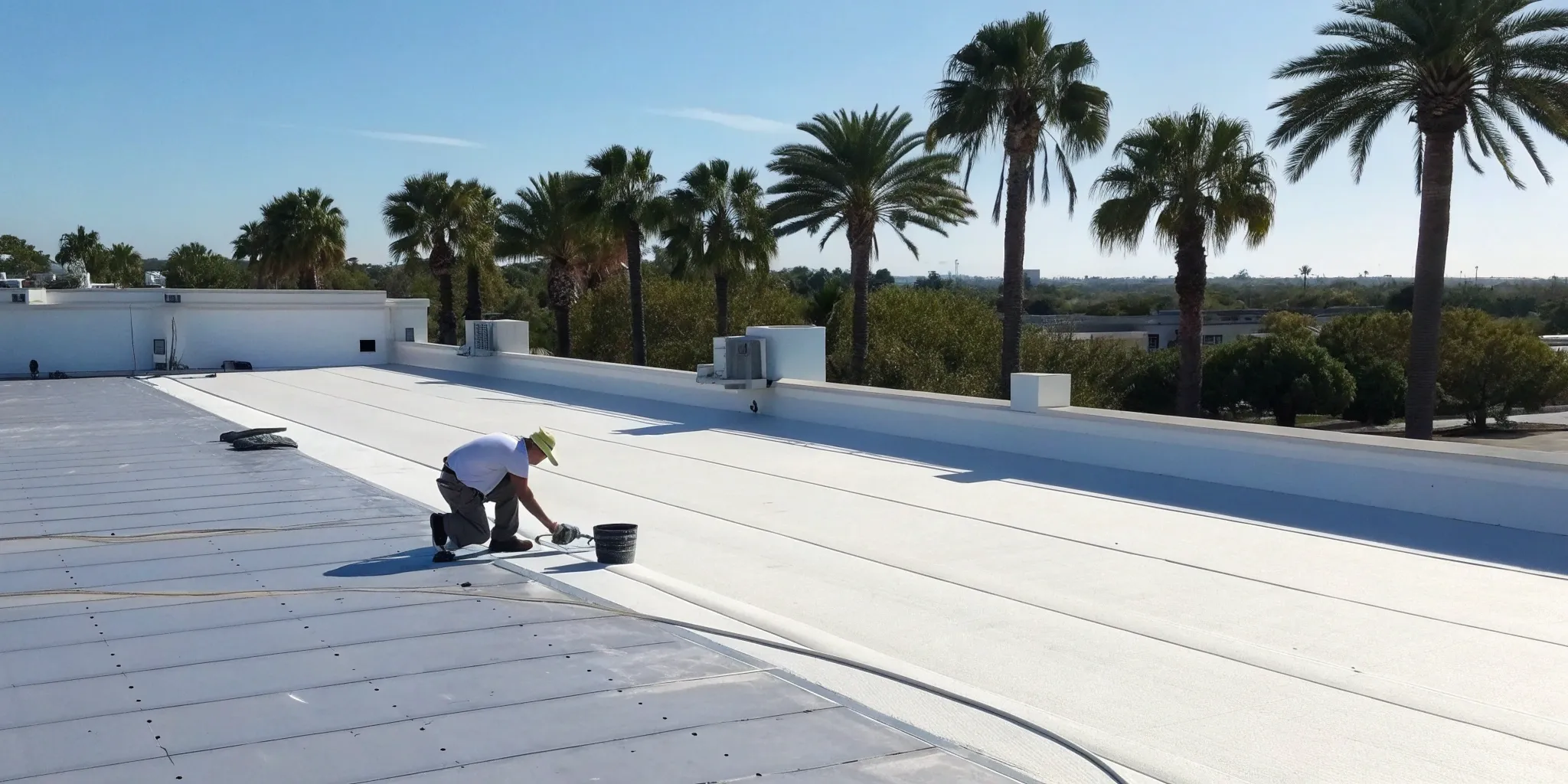
If you’re researching flat roof repairs, you’ve probably run into a confusing alphabet soup of options: TPO, EPDM, PVC, BUR. It’s enough to make anyone’s head spin. How do you cut through the technical jargon to figure out what your roof actually needs? That’s exactly what we’re here to do. This guide breaks down the most common materials in simple, straightforward terms. This page outlines common flat roof repair materials and their use cases. Business owners seeking a complete overview of commercial roof systems and replacement planning should refer to our commercial roof replacement resource.
Key Takeaways
- Choose materials for the long haul: Look beyond the initial price tag and consider how a material will perform in Florida’s climate. An energy-efficient, durable option might cost more upfront but can save you significantly on cooling bills and future repairs.
- Prioritize professional installation and drainage: Even the best material will fail if it’s not installed correctly. A professional job ensures a watertight seal and proper drainage, which is essential for preventing ponding water and extending your roof’s lifespan.
- Make maintenance a routine, not a reaction: Stay ahead of major issues with simple, proactive steps. Scheduling biannual inspections and keeping drains clear of debris are the most effective ways to protect your investment and avoid stressful emergency repairs.
What Are My Options for Flat Roof Repair Materials?
When you have a flat or low-slope roof, choosing the right repair material is crucial, especially here in Florida. You’re not just patching a leak; you’re investing in protection against intense sun, heavy rain, and high humidity. The good news is that you have several excellent options, each with its own set of strengths. Whether you own a commercial property or have a flat roof section on your home, understanding these materials will help you make a smart decision that keeps your property safe and dry for years to come. Let’s walk through the most common choices so you can see what might work best for you.
EPDM Rubber
Think of EPDM (Ethylene Propylene Diene Monomer) as a heavy-duty rubber sheet for your roof. It’s a synthetic rubber membrane known for being incredibly durable and flexible. This flexibility is a huge plus because it allows the material to handle Florida’s temperature swings without cracking. EPDM is a long-term solution, often lasting more than 30 years with proper installation and maintenance. It’s a reliable choice for property owners who want a material that can stand up to the elements and provide lasting protection. Its resilience makes it a popular option for both new roofs and repairs on existing structures.
TPO (Thermoplastic Olefin)
If you want to keep your building cooler and lower your energy bills, TPO is a fantastic option. This single-layer membrane is typically white, which means it does a great job of reflecting the intense Florida sun instead of absorbing it. TPO is also lightweight and generally more affordable than some other materials, which can make the installation process a bit simpler and more cost-effective. It’s a newer material on the market, but it has quickly become a favorite for commercial roofing due to its energy efficiency and strong, heat-welded seams that provide excellent protection against leaks.
Modified Bitumen
Modified Bitumen is essentially an evolution of traditional asphalt roofing. It comes in rolls and is reinforced with materials like polyester or fiberglass, making it much more flexible and durable than old-school asphalt. This material is a solid choice for residential homes with flat roof sections, like over a porch or garage. It’s known for its tear resistance and waterproofing capabilities. With a lifespan of around 15 years, it offers a dependable and proven solution. The installation is straightforward, often involving a peel-and-stick application that creates a strong, watertight seal to protect your home.
PVC
PVC (Polyvinyl Chloride) is another white, reflective membrane that’s a powerhouse against the elements. It’s known for being exceptionally strong and resistant to fire, wind, and even hail damage. Like TPO, its reflective surface helps reduce air conditioning costs, a major benefit for any Florida property owner. PVC roofs are built to last, with a potential lifespan of 30 to 40 years. The seams are heat-welded to form a permanent, watertight bond, creating a single, durable sheet across your entire roof. This makes it one of the most reliable materials for long-term performance.
Built-Up Roofs (BUR)
A Built-Up Roof, often called a “tar and gravel” roof, is a classic for a reason. This system is constructed with multiple layers of asphalt and reinforcing fabric, then topped with a layer of gravel or crushed stone. This multi-layer design creates a thick, durable surface that’s highly resistant to water and UV rays. BUR systems are tough and can last anywhere from 15 to 30 years. The gravel top layer provides excellent protection from foot traffic and the sun’s harsh rays, making it a time-tested and sturdy option for flat roofs that need to withstand a lot of wear and tear.
Spray Polyurethane Foam (SPF)
Spray Polyurethane Foam, or SPF, is a unique material that starts as a liquid and expands into a solid, seamless foam layer directly on your roof. This creates a continuous, waterproof barrier with no seams, which is where leaks often start. After it’s applied, it’s coated with a protective layer to shield it from UV rays. SPF is an incredible insulator, which can significantly cut down on your energy costs. With proper maintenance, an SPF roof can last over 50 years, making it one of the longest-lasting options available. It’s a premium choice for property owners focused on energy efficiency and longevity.
Pros and Cons: Which Flat Roof Material Is Right for You?
Choosing the right material for your flat roof is a big decision. It’s not just about how it looks; it’s about finding a solution that can stand up to Florida’s intense sun, heavy rains, and occasional hurricanes. Each material has its own set of strengths and weaknesses, and the best choice for your property depends on your budget, long-term goals, and specific needs. A material that works perfectly for a sprawling commercial building might not be the best fit for a residential home with a small flat-roofed patio. Understanding the key differences in durability, energy efficiency, and cost will help you make an informed choice that protects your investment for years to come. Let’s walk through the most common flat roof materials so you can feel confident in your decision.
EPDM Rubber: The Good and The Bad
EPDM (Ethylene Propylene Diene Monomer) is a synthetic rubber membrane that’s known for its incredible durability. Think of it as a giant, tough rubber sheet protecting your property. Its biggest advantage is its lifespan; a well-installed EPDM roof can last for more than 50 years. It’s also highly resistant to hail, UV rays, and extreme temperatures. Plus, its flexibility is impressive—it can stretch up to 300% without damage, which helps it handle building shifts and temperature changes. The main drawback, especially for us in Florida, is that standard black EPDM absorbs heat, which can drive up cooling costs. While lighter colors are available, they often come at a higher price.
TPO: What to Know
TPO (Thermoplastic Olefin) is one of the most popular materials for commercial roofs today, and for good reason. It’s a single-ply membrane that offers a great balance of performance and cost. One of its key benefits is energy efficiency. TPO is typically white or light-colored, which helps reflect the intense Florida sun and can lower your energy bills. The seams are heat-welded together, creating a strong, monolithic surface that’s highly resistant to leaks. On the downside, its lifespan is generally shorter than EPDM, typically lasting between 20 and 30 years. The quality can also vary significantly between manufacturers, so it’s important to choose a trusted brand.
Modified Bitumen: Strengths and Weaknesses
Modified Bitumen is an asphalt-based roofing material that comes in rolls. Think of it as a modern evolution of the traditional tar-and-gravel roof. It’s known for being incredibly strong and tear-resistant, making it a solid choice for roofs that experience foot traffic. It also performs well in extreme temperatures, both hot and cold. Some modern versions have a peel-and-stick application, which makes installation easier and safer. However, its lifespan is on the shorter side, usually around 15 years. It can also be susceptible to damage from ponding water if the roof doesn’t have proper drainage, which is a key consideration in our rainy climate.
PVC: Is It the Right Choice?
PVC (Polyvinyl Chloride) is another single-ply membrane, often considered a premium roofing option. It’s a fantastic choice for Florida properties because of its exceptional durability. PVC roofs are highly resistant to fire, wind, and chemicals. They are also very strong against punctures and hail, which is a huge plus during storm season. Like TPO, the seams are heat-welded for a watertight seal, and its light color helps with energy efficiency. A PVC roof can last between 30 and 40 years. The primary consideration is cost, as PVC is typically more expensive upfront than TPO or EPDM, but its longevity can make it a worthwhile investment.
Built-Up Roofs: Benefits and Limitations
A Built-Up Roof (BUR), often called a “tar and gravel” roof, is the classic, time-tested option for flat roofs. It’s made of multiple layers of asphalt and reinforcing fabrics, topped with a layer of gravel or other aggregate. This multi-layer system provides excellent protection against water and UV rays. They are also very durable and require little maintenance over their lifespan, which typically ranges from 15 to 30 years. The downsides are that BUR systems are very heavy, and the installation process can be messy and produce strong odors. They also take longer to install compared to modern single-ply systems.
SPF: Key Advantages and Considerations
Spray Polyurethane Foam (SPF) is a unique roofing material applied as a liquid. As it’s sprayed onto the roof, it expands into a solid, seamless foam layer that completely seals the surface. This seamless quality makes it one of the best options for preventing leaks. SPF also provides excellent insulation, which can lead to significant energy savings on your cooling bills. With proper maintenance, an SPF roof can last over 50 years. The main challenge is that it requires specialized equipment and highly skilled technicians for proper installation. The foam must also be protected by a special coating that needs to be reapplied every 10 to 15 years to prevent UV damage.
Lifespan Showdown: How Long Will Your Flat Roof Last?
When you invest in a new roof, you want to know it’s built to last. The lifespan of a flat roof depends heavily on the material you choose, the quality of the installation, and how well it stands up to the Florida weather. While some materials can last for decades, others might need replacing much sooner. Understanding these differences is key to making a smart choice for your home or commercial property. Let’s break down what you can expect from different flat roofing materials and what you can do to get the most years out of your investment.
Comparing Material Lifespans
The material you choose for your flat roof is the biggest factor in determining its lifespan. In Florida, popular options like TPO and modified bitumen are designed to handle our climate. A well-installed TPO roof can last between 20 and 30 years, while modified bitumen typically offers a lifespan of 10 to 20 years. Other materials like PVC can last 25 years or more, thanks to their durability. Even older systems like built-up roofing (BUR), which have been around for over a century, can last 15 to 30 years with proper maintenance. Each option has its own set of strengths, and the right choice often depends on your specific needs and budget for your commercial roofing project or home.
How Florida’s Climate Affects Your Roof
Florida’s weather is no joke, and it can take a serious toll on a flat roof. The intense, year-round UV radiation can cause materials to degrade and become brittle over time. High humidity and frequent, heavy downpours create a constant threat of water intrusion. One of the biggest issues for flat roofs here is ponding water—when water pools on the surface instead of draining properly. This standing water can lead to leaks and even structural damage. Add in the threat of hurricane-force winds, and it’s clear that a Florida roof needs to be tough. Without the right materials and installation, our climate can significantly shorten your roof’s lifespan and lead to the need for emergency roof repair.
What Makes a Roof Last Longer?
Beyond choosing a durable material, a few key things can extend the life of your flat roof. First, quality matters. Opting for cheaper, lower-quality materials might save you money upfront, but it often leads to premature wear and costly repairs down the road. Second, proper drainage is non-negotiable. A roof system designed to effectively manage Florida’s heavy rainfall will prevent ponding water and the serious damage it causes. Finally, professional installation is crucial. An experienced team ensures that your residential roofing system is installed correctly, with no shortcuts that could compromise its integrity. A well-installed, high-quality roof with excellent drainage is your best defense against the elements.
How to Choose the Right Flat Roof Repair Material
Picking the right material for your flat roof repair isn’t just about patching a leak; it’s about making a smart investment in your property’s future. With so many options out there, it can feel overwhelming. But don’t worry—I’m here to walk you through the key factors you need to consider. By thinking about your budget, our unique Florida climate, and the specific needs of your roof, you can make a choice that protects your home or business for years to come. Let’s break down what really matters.
Consider Your Budget and Long-Term Costs
It’s tempting to go for the cheapest material upfront, but that can be a costly mistake in the long run. A low-cost material might need more frequent repairs or a full replacement sooner than a more durable, slightly more expensive option. Think about the total cost of ownership, which includes installation, maintenance, repairs, and lifespan. A quality material installed by a professional team is an investment that pays off. If the initial cost is a concern, remember that there are often financing options available to help you choose the best material for your roof without compromising on quality.
Factor in Florida’s Weather
Our beautiful Florida weather can be tough on roofs. Intense UV radiation, high humidity, heavy downpours, and the occasional hurricane all take their toll. You need a material that can stand up to the elements. Some materials degrade quickly under constant sun exposure, while others are better at resisting moisture and high winds. When choosing, think about materials known for their durability in subtropical climates. A thorough hail damage inspection can also reveal vulnerabilities, helping you select a material that offers the best protection against future storms and the relentless Florida sun.
Think About Water Ponding
Flat roofs are notorious for “ponding,” where water gathers in low spots instead of draining away. In Florida, where we get sudden, heavy rain, this is a major concern. Standing water can lead to leaks, material breakdown, and even structural damage over time. Some materials, like PVC and EPDM, are highly resistant to ponding water. However, the best solution is ensuring your roof has proper drainage in the first place. When discussing materials with your contractor, be sure to talk about your roof’s slope and drainage system to prevent water from pooling.
Look for Energy-Efficient Options
In a place as sunny and warm as Central Florida, an energy-efficient roof can make a huge difference in your cooling bills. Materials like TPO and PVC are often white or light-colored, which means they reflect sunlight instead of absorbing it. This keeps your building cooler and reduces the strain on your air conditioning system. This “cool roof” technology is not just good for your wallet; it’s also a more environmentally friendly choice. When you’re weighing your options, ask about the Solar Reflectance Index (SRI) of each material to find the most energy-efficient fit for your property.
Understand the Installation Process
The best roofing material in the world won’t perform well if it’s not installed correctly. Each material has its own specific installation requirements, from heat-welded seams for TPO and PVC to adhesive applications for EPDM. Selecting a material that is inappropriate for your roof’s structure can lead to premature wear and tear. It’s crucial to work with a team that has proven experience with the material you choose. A professional commercial roofing contractor will ensure every detail is handled correctly, giving you a durable, long-lasting repair that you can count on.
Check Compatibility with Your Current Roof
You can’t always layer a new repair material over your existing roof. Some materials just don’t play well together, and putting an incompatible product on top can lead to system failure. For example, certain adhesives or coatings might react negatively with the underlying material. A professional roofer will need to assess your current roof to determine the best course of action. Sometimes, the old material may need to be removed entirely. This initial assessment is a critical step in ensuring your residential roofing repair is successful and won’t cause bigger problems down the road.
Common Mistakes to Avoid When Choosing Roofing Materials
Choosing the right material for your flat roof repair is a big decision, and a few common missteps can lead to headaches down the road. Being aware of these pitfalls from the start can save you time, money, and stress. It’s about more than just picking a material; it’s about creating a complete roofing system that protects your property for years to come. By avoiding these errors, you can feel confident that you’re making a smart investment in your home or business.
Don’t Settle for Low-Quality Materials
It can be tempting to choose the cheapest option to save money upfront, but this often backfires. Selecting low-quality or inappropriate materials can cause your roof to wear out much faster, leading to more frequent repairs and an earlier-than-expected replacement. Think of it as an investment in your property’s future. High-quality materials are designed to withstand Florida’s intense sun and heavy rains, offering better protection and a longer lifespan. Spending a little more now on a durable material means you’ll likely spend a lot less on emergency roof repairs later.
Always Follow Manufacturer Guidelines
Every roofing material comes with a specific set of installation instructions for a reason. These guidelines are designed to ensure the material performs as promised. Skipping steps like a proper structural assessment, using the wrong waterproofing membrane, or installing flashing incorrectly can compromise your entire roof. A professional roofer understands that these aren’t just suggestions—they’re requirements for a watertight and long-lasting roof. Following the manufacturer’s specifications is key to ensuring your warranty remains valid and your roof functions correctly.
Don’t Forget About Our Climate
Florida’s weather is a major factor in your roof’s health. Our flat roofs are constantly exposed to harsh UV radiation, high humidity, torrential downpours, and the threat of hurricane-force winds. These conditions can cause some materials to degrade quickly. When choosing a repair material, it’s essential to select one that is specifically designed to handle these challenges. For both residential roofing and commercial properties, picking a material proven to perform in our subtropical climate is one of the most important decisions you’ll make.
Prioritize Proper Drainage
Flat roofs aren’t perfectly flat—they have a slight slope to direct water toward drains. However, they are still susceptible to “ponding,” where water collects in low spots. This standing water can lead to leaks and even structural damage over time. The right repair material, combined with a proper drainage design, is your best defense. When discussing your options with a contractor, make sure you talk about how the material will support effective drainage and prevent water from pooling on your roof’s surface.
Leave Installation to the Pros
Even the most advanced roofing material will fail if it’s not installed correctly. Poor installation is a common mistake that can turn a simple repair into a major problem, leading to leaks and voiding material warranties. A professional roofing team has the training, tools, and experience to handle the specific challenges of each material, from sealing seams to integrating flashing. Entrusting your commercial roofing project to experts ensures the job is done right the first time, giving you peace of mind and protecting your property.
Keeping Your Flat Roof in Top Shape: A Maintenance Guide
A flat roof is a fantastic feature for any Florida property, but it does require a little TLC to perform its best. The good news is that staying on top of maintenance is simpler than you might think. A proactive approach not only extends the life of your roof but also prevents small, manageable issues from turning into costly, stressful emergencies. Think of it as a simple checklist that protects your investment. By scheduling regular check-ups, keeping things clean, and knowing who to call when you need help, you can ensure your roof remains a durable, reliable shield for your home or business for years to come. Let’s walk through the key steps to keep your flat roof in excellent condition.
Schedule Regular Inspections
One of the biggest myths about roofing is that you only need to pay attention to it when you see a leak. Waiting for water to drip from your ceiling is a reactive approach that often leads to more extensive damage. Instead, plan to have your roof inspected at least twice a year—ideally in the spring and fall—and always after a major storm. A professional can spot subtle signs of wear and tear, like blistering, cracking, or issues with the flashing, long before they become serious problems. A thorough hail damage inspection can also identify hidden damage that might not be visible from the ground, saving you from future headaches and giving you peace of mind.
Follow a Preventive Maintenance Plan
Having a consistent maintenance plan is your best defense against unexpected repairs. It’s all about catching potential issues when they’re small and easy to fix. While you can handle some basic visual checks yourself, having an experienced professional on your side makes all the difference. They have the training to identify vulnerabilities you might miss, from compromised seams to early signs of material degradation. A roofer can create a maintenance schedule tailored to your specific roof type and our local climate, ensuring your residential roofing system gets the precise care it needs to last. This proactive step is one of the smartest ways to manage your long-term roofing costs and protect your property.
Keep Drains Clear
For flat roofs, proper drainage is everything. Because they don’t have a steep slope, water needs a clear path to exit. A prime cause of serious damage is ponding water, which occurs when drains, scuppers, or gutters get clogged with leaves, twigs, and other debris. Standing water adds immense weight to your roof structure and accelerates the breakdown of roofing materials, leading to leaks and deterioration. Make it a habit to check your drainage systems regularly, especially after heavy rain or wind. Ensuring water can flow freely is a simple but critical task that prevents some of the most common and destructive flat roof problems here in Florida.
Know When to Call a Professional
While the DIY spirit is admirable, roof repairs are best left to the pros. Using the wrong materials or techniques can turn a small problem into a much larger one. A patch that seems to work might just be a temporary fix that traps moisture underneath, leading to more leaks and rot down the line. A professional roofer can accurately trace a leak to its source and perform a lasting repair. If you notice a sudden leak or significant damage after a storm, don’t hesitate to call for emergency roof repair. Acting quickly can prevent water damage from spreading to your home’s interior and structure, saving you from a much bigger mess.
Simple Steps to Extend Your Roof’s Lifespan
Beyond inspections and clearing drains, a few simple habits can make a big difference. If you have trees with branches hanging over your roof, keep them trimmed back. This reduces the amount of falling leaves and debris and also prevents branches from scraping or puncturing the roof surface during a storm. It’s also wise to limit foot traffic on your roof to avoid unnecessary wear. For an extra layer of protection against the Florida sun, consider asking a professional about cool roof coatings. These innovative materials can reflect UV rays, lower your building’s temperature, and reduce strain on the roofing material, helping it last longer.
Related Articles
- The Ultimate Guide to Commercial Flat Roof Repair
- Why Your Metal Roof Leaks in Heavy Rain & What to Do
- DIY Shingle Roof Leak Repair: A Step-by-Step Guide
- How to Repair a Leak in Your Roof: The DIY Guide
Frequently Asked Questions
How do I know if my flat roof needs a repair or a complete replacement? The answer really depends on the age of your roof and the extent of the damage. If you’re dealing with a single, isolated leak or minor damage on a relatively young roof, a professional repair is often all you need. However, if your roof is nearing the end of its expected lifespan, has widespread issues like blistering or cracking, or has suffered extensive water damage, a full replacement is usually the smarter long-term investment.
Is a white, reflective roof really worth it in Florida? Absolutely. A white or light-colored roof, often called a “cool roof,” can make a significant difference here. Instead of absorbing the intense Florida sun and heating up your building, it reflects the UV rays. This keeps the surface temperature of the roof much lower, which reduces the strain on your air conditioning system and can lead to noticeable savings on your energy bills. It also helps protect the roofing material itself from heat-related degradation.
Can I just put a coating over my existing flat roof to fix a leak? While roof coatings are an important part of some roofing systems and maintenance plans, they are not a substitute for a proper repair. Simply applying a coating over a damaged area can trap moisture underneath, which can cause the underlying materials to rot and make the problem much worse. The source of the leak must be correctly identified and fixed first before any protective coating is applied.
Which flat roof material is the most durable against hurricanes? There isn’t one single material that’s guaranteed to be hurricane-proof, but some are certainly more resilient than others. Materials with heat-welded seams, like PVC and TPO, create a single, unified membrane that is highly resistant to wind uplift. The most critical factor, however, is the quality of the installation. A professionally installed roof that is properly secured to the building provides the best defense against high winds, regardless of the specific material.
What’s the most common cause of flat roof leaks? The vast majority of flat roof leaks can be traced back to two main issues: installation errors and poor drainage. Flashing that wasn’t installed correctly around vents and edges or seams that weren’t properly sealed are frequent points of failure. The other major culprit is ponding water caused by clogged drains. When water is left to stand on the roof, it puts immense stress on the materials and will eventually find a way in.