
That unmistakable drip, drip, drip during a Florida downpour is a sound that can send any homeowner into a panic. Your mind immediately races with questions about damage, cost, and the big one: how do I stop my roof leaking in heavy rain? Before you get overwhelmed, take a breath. Your immediate actions can significantly reduce the damage and stress. This guide is your calm, step-by-step plan. We’ll walk you through exactly what to do the moment you spot a leak, from containing the water to safely managing the situation. We’ll also cover safe, temporary fixes you can use and explain the critical mistakes to avoid.
Key Takeaways
- Control the damage from inside your home: Your first steps during a leak are to contain the water with buckets, relieve pressure from ceiling bubbles, and document everything for insurance. Never climb on a wet roof; your safety comes first.
- Understand that quick fixes are temporary: Emergency patches like tarps or sealants are designed to get you through a storm, not solve the problem. A professional is essential for finding the true source of the leak and providing a permanent repair.
- Adopt a proactive maintenance routine: You can prevent most leaks before they start with simple, consistent care. This includes scheduling annual professional inspections, keeping your gutters free of debris, and promptly replacing any cracked or missing shingles.
Why Is My Roof Leaking When It Rains?
The sound of a dripping ceiling during a storm is stressful, but finding the cause is the first step. Leaks often trace back to a few common issues that compromise your roof’s defenses against the weather. Understanding these weak points can help you identify the problem and take the right action.
Missing or Damaged Shingles
Your shingles are the primary barrier against rain. Over time, Florida’s sun and storms can cause them to crack, curl, or lose their protective granules. A single missing or damaged shingle is all it takes for water to seep underneath and into your home. This is why maintaining your residential roofing is so important. Regular checks, especially after a storm, can help you spot these vulnerable areas before a small problem becomes a major leak.
Clogged Gutters
Gutters are designed to direct water away from your roof and foundation. When they become clogged with leaves and debris, rainwater can’t drain properly. Instead, it pools along the roof’s edge and backs up under the shingles, causing leaks that can damage your eaves and attic. If you notice water spilling over the sides of your gutters during a storm, a blockage is the likely culprit. Keeping your gutters clean is a simple but effective way to prevent water intrusion and protect your home.
Faulty Flashing
Flashing is the metal stripping that seals the joints around chimneys, vents, and skylights. These are the most vulnerable points on your roof, and flashing is what keeps them watertight. However, flashing can rust, come loose in high winds, or get damaged by debris. When this seal is broken, it creates a direct entry point for rain. A thorough hail damage inspection always includes a careful check of all flashing, as it’s often the first thing to fail during severe weather.
Worn-Out Sealants
The caulk and sealants used around vents and flashing provide a crucial waterproof barrier. But under the constant stress of sun and rain, these materials can dry out, crack, and pull away over time. This creates small, hard-to-see gaps that allow water to sneak in during a downpour. These tiny breaches are a common source of mysterious leaks that seem to appear out of nowhere. Regular inspection and reapplication of sealants are essential parts of roof maintenance, especially in our climate.
Your Roof Is Leaking—What to Do Right Now
Discovering a leak in your roof, especially during a heavy downpour, can send anyone into a panic. That tell-tale drip, drip, drip is a sound no homeowner wants to hear. But before you get overwhelmed, take a deep breath. Your immediate actions can make a huge difference in protecting your home from serious, long-term damage. The key is to stay calm and follow a clear plan. Your priority right now isn’t to climb up on the roof and play hero in the middle of a storm; it’s to manage the situation safely from inside. Think of it as triage for your home. You need to stop the dripping and prevent the problem from spreading. By taking control of the water flow, protecting your belongings, and documenting the damage, you are setting yourself up for a much smoother recovery process. This guide will walk you through exactly what to do, step by step, from the moment you spot the leak until a professional can arrive. These are the critical first moves that will save you time, money, and a lot of stress down the road. Remember, the roof can be fixed, but your safety and your belongings need to be protected right now.
Contain the Water Damage
Your first move is to limit the water’s spread. Grab buckets, trash cans, or any waterproof container you have and place them directly under the drips. If the water is splashing, put an old towel or t-shirt at the bottom of the bucket to absorb the impact and quiet the noise. If you can, move furniture, electronics, and other valuables out of the affected area. If something is too heavy to move, cover it with a plastic tarp or sheet. Containing the mess is a critical first step before you call for emergency roof repair. This quick action can save you a lot of money and heartache by protecting your floors, furniture, and belongings from extensive water damage.
Safely Drain Ceiling Bubbles
If you see a bulge or bubble forming in your ceiling, you need to act carefully but quickly. That bubble is a pocket of water that is putting immense strain on your drywall. If it bursts, it could cause a large section of your ceiling to collapse. To prevent this, place a bucket directly underneath the bubble. Then, using a screwdriver or something similar, carefully puncture the center of the bulge with a small hole. This will allow the water to drain in a controlled stream into the bucket below. It might seem counterintuitive to poke a hole in your ceiling, but it’s the safest way to release the pressure and prevent a much bigger problem.
Document Everything for Insurance
Once you’ve managed the immediate leak, switch into record-keeping mode. This step is vital for a smooth insurance claim process. Use your phone to take clear photos and videos of the leak, the water containers, and any damaged property or areas of your home. Keep a simple log of when you first noticed the leak and the steps you took to control it. If you buy any supplies for a temporary fix, like a tarp or sealant, hold onto the receipts. Having thorough documentation makes the process much easier when you seek roof claim assistance. Your insurer will want to see clear evidence of the damage and the timeline of events.
Assess the Situation from a Safe Spot
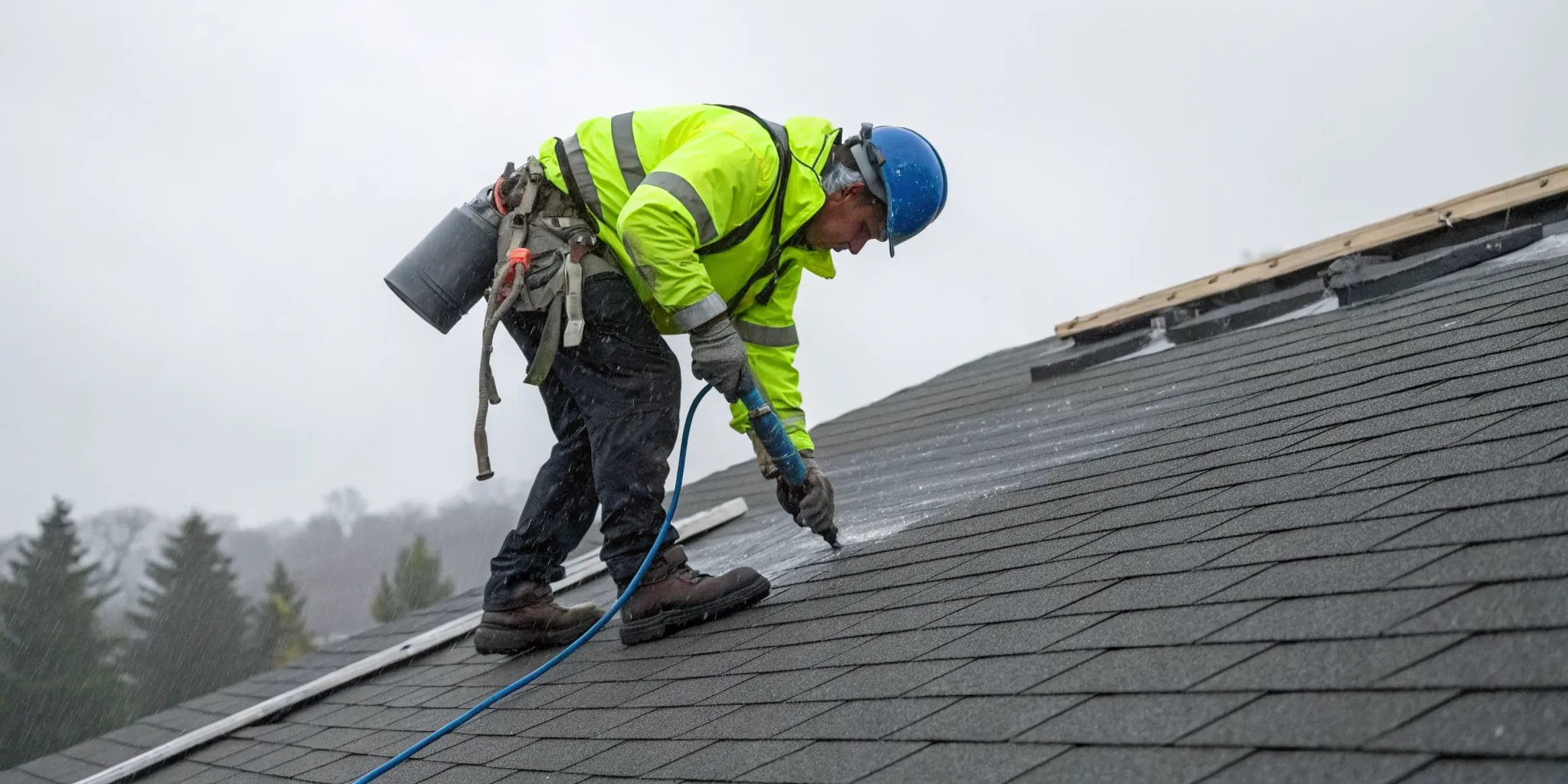
It can be tempting to head outside and find the source of the leak yourself, but please, stay off the roof. It is never safe to climb onto a roof during a storm with rain, high winds, or lightning. Even after the rain stops, a wet roof is incredibly slippery and dangerous. You can do a quick visual check from the ground or a second-story window to see if there’s obvious damage, like a fallen tree limb or missing shingles. Leave the hands-on inspection to the professionals. A trained roofer has the safety equipment and experience to properly assess the damage without putting themselves, or you, at risk.
How to Temporarily Stop a Leak During a Storm
When a storm is raging and water is dripping into your home, your first instinct is to get on the roof and fix it. Please don’t. Your safety is the number one priority, and climbing a wet, slippery roof during a storm is incredibly dangerous. The goal here is to manage the situation from inside your home or, if the weather calms, to apply a temporary patch that will hold until a professional can arrive. These quick fixes are not permanent solutions, but they can prevent thousands of dollars in water damage. Once the storm has passed, it’s crucial to call for emergency roof repairs to address the root cause of the leak and ensure your home is secure.
Use an Emergency Tarp
If the storm subsides and you can safely access your roof, an emergency tarp is one of the most effective temporary measures. You’ll need a heavy-duty tarp that’s large enough to cover the suspected leak area completely. Drape it over the roof so it extends past the peak (the ridge) on the other side. This prevents water from running underneath it. Instead of using nails, which can cause more damage, secure the tarp with heavy objects like bricks, sandbags, or pieces of wood on the edges. This method creates a solid barrier that will redirect rainwater away from the vulnerable spot until a proper repair can be made.
Apply Roofing Cement or Sealant
For a more direct approach to sealing a specific crack or hole, roofing cement or sealant can be a lifesaver. Look for products specifically labeled as “wet patch” sealants, as these are formulated to adhere to wet surfaces. You can apply this thick, tar-like substance directly to the source of the leak, such as cracked flashing around a chimney or a hole left by a nail. Use a putty knife or caulk gun to spread it generously over the damaged area, ensuring you create a watertight seal. This is a messy job, but it’s a reliable way to stop a small leak in its tracks during a downpour.
Try Roofing Tape and Patches
If you’re dealing with a smaller hole or a gap around a vent pipe, water-resistant flashing tape is an excellent quick fix. This specialized tape is incredibly sticky and creates a strong, waterproof seal almost instantly. Simply clean the area around the leak as best you can, cut a piece of tape that generously covers the hole, and press it down firmly to ensure it adheres completely. It’s a simple, effective solution for minor damage and is much easier to handle than roofing cement. Think of it as a heavy-duty bandage for your roof that can hold things together until a professional can perform a permanent repair.
Gather Your Emergency Repair Kit
The best time to deal with a leak is before it happens. As a homeowner in Central Florida, having an emergency roof repair kit on hand is a smart move. You can assemble one yourself with a few key items from the hardware store. Be sure to include a caulk gun, a tube of “wet patch” roofing cement, a roll of flashing tape, a utility knife, and basic safety gear like gloves and non-slip shoes. Having these tools ready means you won’t be scrambling during a storm. You’ll be prepared to apply a quick, temporary patch safely and efficiently, minimizing water damage and stress.
Emergency Repair Mistakes to Avoid
When you see water dripping from your ceiling, your first instinct is to act fast. While that urgency is good, some common reactions can actually make the situation worse, create safety hazards, or even complicate your insurance claim. Knowing what not to do is just as important as knowing what to do. Let’s walk through a few critical mistakes to avoid when you’re dealing with an emergency roof leak.
Climbing on the Roof in Bad Weather
This is the most important rule: stay off the roof during a storm. It might seem like the most direct way to solve the problem, but it’s incredibly dangerous. High winds can easily cause you to lose your balance, and a wet, slippery roof is an accident waiting to happen, especially if it’s already damaged. Add lightning to the mix, and you have a recipe for disaster. Your safety is the top priority. Any emergency roof repair that requires getting on top of the house should be left to professionals with the right safety equipment and training to handle hazardous conditions. Please wait for the storm to pass before attempting any exterior assessment.
Using a Temporary Patch as a Permanent Fix
A tarp or a quick coat of roofing cement can feel like a lifesaver in the middle of a downpour, and it is, for a little while. But it’s crucial to remember that these are temporary fixes, not permanent solutions. These patches are only designed to get you through the storm and maybe a few days after. Leaving a tarp on for weeks or months can trap moisture, leading to rot and more extensive damage underneath. Once the weather is clear, your next step should be to schedule a professional inspection. A proper, permanent repair will address the root cause of the leak and ensure your residential roofing is secure for the long term.
Ignoring the True Source of the Leak
Water is tricky. The spot where you see a drip on your ceiling is often not directly below the hole in your roof. Water can travel along rafters and insulation before it finally finds a place to come through. If you only patch the area right above the interior drip, you likely haven’t solved the problem. The real entry point could be several feet away, near a chimney, vent pipe, or skylight where the flashing has failed. A thorough hail damage inspection can uncover these hidden issues. A professional will know how to trace the path of the water to find the true source and fix it correctly the first time.
Leaving Loose Materials Unsecured
If you decide to place a tarp on your roof after the storm has passed and it’s safe to do so, make sure you secure it properly. The biggest mistake people make is using nails to hold it down. This creates more holes in your shingles, which can lead to new leaks. Instead, use heavy objects like bricks or sandbags to weigh down the edges of the tarp. Drape the tarp over the roof’s peak and make sure it’s held down firmly on all sides. An unsecured tarp can easily be caught by the wind, turning it into a dangerous projectile and leaving the damaged area exposed once again.
When to Call a Professional Roofer
Temporary fixes are fantastic for getting you through a storm, but they are not a permanent solution. Knowing your limits is key to protecting your home and yourself. While a small, manageable drip might be something you can handle for a short time, certain situations are clear signals that you need to step back and call for professional help. Ignoring these signs can lead to more extensive damage and costly repairs down the road. If you find yourself in a situation that feels too big, too complicated, or too dangerous, it’s always best to trust the experts. A professional roofer has the training, tools, and safety equipment to handle the problem correctly.
Sometimes, the safest and most effective tool you have is your phone. Don’t hesitate to request emergency roof repair when you’re facing a serious leak. Here are four scenarios where calling a professional is not just a good idea, but an absolute necessity.
You Suspect Structural Damage
If you notice your ceiling starting to sag or bow, it’s a major red flag. A sagging roof is a sign of a serious structural issue that goes far beyond a simple leak. This indicates that water has been accumulating for some time, soaking and weakening the underlying supports of your roof. You might also hear creaking or popping noises. This is not a DIY situation. A compromised roof structure is incredibly dangerous and requires an immediate professional assessment to prevent a potential collapse. A professional can determine the extent of the damage to your residential roofing system and create a plan for securing your home safely.
The Water Damage Is Widespread
One small leak is one thing, but if you’re seeing water stains spreading across your ceiling, running down multiple walls, or appearing in different rooms, you’re dealing with a widespread problem. This usually means water is entering from several points or that a single large breach is allowing a significant amount of water into your home’s structure. You might also notice a musty smell or see visible mold growth, which can pose health risks. A professional can perform a thorough hail damage inspection or general assessment to trace every path the water is taking and address the root cause, ensuring no hidden moisture is left behind.
There’s a Risk of an Electrical Hazard
Water and electricity are a life-threatening combination. If you see water leaking from a light fixture, dripping near an electrical outlet, or anywhere close to your circuit breaker box, you have an electrical hazard. Do not attempt to fix the leak yourself. The first step is to turn off the power to that area from your breaker panel if you can do so safely. The next step is to call for emergency roof repair immediately. A professional roofer will know how to work around these hazards safely while addressing the source of the leak. Your safety is the top priority, and this is a risk you should never take.
Your DIY Fix Isn’t Holding Up
You did a great job getting a tarp or some roofing cement on the leak to stop the immediate flow of water. But if the storm passes and the leak returns, or if your patch fails after a day or two, it’s a clear sign that the problem is more complex than it first appeared. Temporary patches are just that: temporary. They are not designed to withstand the elements for long. A persistent leak needs a permanent, professional repair. A roofer can properly fix the underlying issue, and if the damage is significant, they can provide documentation and roof claim assistance to help you with your insurance company.
How to Prevent Future Roof Leaks
Once you’ve managed an active leak, the last thing you want is a repeat performance. The best way to handle future leaks is to stop them before they ever start. Proactive roof maintenance is your best defense against water damage, saving you stress and money down the road. Think of it as a health plan for your home; a little preventative care goes a long way in keeping your roof strong and your interior dry, especially with Florida’s unpredictable weather.
Taking a few key steps throughout the year can make a huge difference. From routine check-ups to seasonal prep, these habits help you spot vulnerabilities and fix them before the next storm rolls in. It’s about shifting from a reactive mindset to a proactive one. Here are four practical ways to protect your roof and prevent future leaks.
Schedule Regular Roof Inspections
One of the most effective ways to prevent leaks is to have a professional inspect your roof at least once a year. An expert can spot subtle signs of wear and tear that are easy to miss, like failing seals around vents or early signs of shingle deterioration. A hail damage inspection after a storm is also a smart move, as even small impacts can compromise your roof’s integrity. Catching these issues early allows for simple repairs, preventing them from turning into major leaks during the next downpour. A professional inspection gives you a clear picture of your roof’s health and a plan to keep it in top shape.
Keep Your Gutters Clean
It’s easy to forget about your gutters, but they play a critical role in protecting your roof. When gutters get clogged with leaves, pine needles, and other debris, water can’t drain properly. Instead, it backs up and pools along the edge of your roof. This standing water can seep underneath your shingles and into the roof deck, causing rot and leaks. Check your gutters every few months, especially after a big storm or in the fall. If you see water overflowing during rain, that’s a clear sign they need a good cleaning. Keeping them clear ensures water flows away from your house, just as it should.
Replace Damaged Shingles and Seal Gaps
Your shingles are your roof’s first line of defense, so even one missing or damaged shingle is an open door for water. From the ground, you can often spot obvious problems like shingles that are cracked, curled at the edges, or completely missing. You might also notice dark patches, which can indicate that the protective granules have worn away. It’s important to address these issues right away. Timely repairs are a core part of good residential roofing maintenance and can stop a small problem from becoming a costly headache. Sealing any gaps around flashing or vents is equally important for a watertight roof.
Prepare Your Roof for Storm Season
Living in Central Florida means preparing for storm season is non-negotiable. Before the season begins, take time to get your roof ready. Start by trimming any overhanging tree branches that could break off and damage your roof in high winds. Next, do a visual check for any loose or damaged shingles and clear away any lingering leaves or debris. This simple maintenance ensures your roof is as resilient as possible when facing heavy rain and strong winds. It’s also a good idea to have the number for an emergency roof repair service handy, just in case the unexpected happens. A little preparation can make all the difference.
Related Articles
- How to Repair a Leak in Your Roof: The DIY Guide
- A Quick Fix for a Roof Leak: Your Emergency Guide
- How to Do a Roof Repair From Inside Your Attic
- Shingle Roof Leak Repair: DIY Tips & When to Call Pros
Frequently Asked Questions
The leak stopped when the rain did. Do I still need to call someone? Yes, you absolutely should. A leak that stops when the weather clears is a sign that the underlying problem, like a cracked shingle or faulty flashing, is still there. The water intrusion has likely already soaked insulation and wood inside your attic or ceiling, which can lead to mold growth and rot over time. Think of the drip as just the final symptom; the real damage is the vulnerability that remains, waiting for the next storm.
How can I tell if a small ceiling stain is from an old leak or a new one? A good way to check is to take a pencil and lightly outline the very edge of the stain. Then, keep an eye on it, especially after it rains again. If the discoloration or dampness spreads beyond your pencil line, you have an active leak that needs attention. Old stains are typically dry to the touch and have consistent, well-defined edges, while new or active ones may feel damp, soft, or show signs of recent growth.
Will my homeowner’s insurance cover the cost of a roof leak? It often depends on the cause of the leak. Most standard policies cover damage from sudden and accidental events, like a tree falling on your roof or shingles being torn off by wind. However, they typically do not cover damage resulting from a lack of maintenance or a roof that is simply old and worn out. This is why documenting everything with photos and getting a professional inspection right away is so important for your claim.
What’s the difference between a roof repair and a full roof replacement? A roof repair targets a specific, isolated problem, such as replacing a few missing shingles or sealing the flashing around a chimney. It’s the right choice when the rest of your roof is in good condition. A full replacement is necessary when the damage is widespread, the roofing system is past its expected lifespan, or underlying issues like rot are extensive. A professional inspection can determine which solution is right for your home.
What if my leak happens at night or on a weekend? Roof leaks don’t stick to a 9-to-5 schedule, which is why emergency roof repair services exist. Your immediate steps should still be to contain the water and protect your belongings inside. Once you’ve managed the immediate situation, you should call a professional roofer who offers emergency services. They can often provide guidance over the phone and schedule a visit as soon as it is safe to do so, regardless of the time or day.