When you notice a leak or a sign of wear on your commercial flat roof, it can trigger a wave of uncertainty. Is this a simple fix, or the first sign of a much bigger problem? Should you repair it, or is it time for a full replacement? Making the wrong call can be a costly mistake. This guide is designed to give you clarity and confidence. We’ll break down the key signs that point to a repair versus a replacement, explain the different material options, and show you how to budget for the work. It’s everything you need to know to make an informed decision about your property, including how to find expert flat roof repair Orlando commercial building owners can trust.
Key Takeaways
- Prioritize proactive maintenance: Regular inspections are essential for a commercial flat roof in Orlando. Catching common issues like clogged drains, ponding water, or small membrane cracks early is the most effective way to prevent major structural damage and avoid costly emergency repairs.
- Match the right material to the right contractor: Your roof’s performance depends on two things: choosing a material suited for Florida’s climate, like heat-reflective TPO, and hiring a licensed, insured contractor with specific experience in commercial flat roofing systems.
- Make a strategic repair or replacement decision: A repair is ideal for isolated damage on a younger roof. However, if your roof is old, has widespread issues, or requires frequent fixes, a full replacement is often the more sensible long-term financial choice.
What Are the Most Common Commercial Flat Roof Problems in Orlando?
Managing a commercial property in Orlando means dealing with a unique set of environmental challenges, and your flat roof bears the brunt of it. From the intense summer sun to the sudden, heavy downpours, the local climate can put a serious strain on your roofing system. Understanding the most common issues is the first step toward effective maintenance and avoiding costly surprises. These problems, if left unchecked, can lead to leaks, structural damage, and disruptions to your business.
Damage from Heat and Storms
The Florida sun is relentless, and its constant UV exposure can cause significant wear and tear on your roof. Over time, this extreme heat can lead to the roofing materials blistering, cracking, or becoming brittle. This thermal shock, the cycle of heating during the day and cooling at night, puts constant stress on the roof’s surface. Then there are the storms. Orlando is no stranger to severe weather, and high winds can lift the edges of the roofing membrane, while hail can create punctures and dents. A professional hail damage inspection after a major storm is always a smart move to catch potential issues before they become major leaks.
Poor Drainage and Ponding Water
By design, flat roofs have a very low slope, which can make drainage a challenge. When drainage systems like scuppers or internal drains become clogged, water has nowhere to go. This leads to “ponding,” where water stands on the roof for 48 hours or more after rainfall. The constant moisture and added weight from ponding water can accelerate the deterioration of roofing materials, weaken the roof’s structure, and eventually cause persistent leaks. Ensuring your commercial roofing system has proper drainage is critical to preventing long-term, expensive damage, especially with Orlando’s frequent heavy rains.
Cracked or Deteriorating Membranes
The membrane is your flat roof’s primary line of defense against the elements. Unfortunately, constant exposure to UV rays, rain, and temperature fluctuations can cause it to break down over time. You might notice cracks, splits, or blisters forming on the surface. This deterioration compromises the roof’s watertight integrity, creating easy entry points for water. Even a small crack in the membrane can allow a significant amount of water to seep into the underlying insulation and roof deck, leading to mold growth and structural rot if not addressed quickly. Regular inspections can help you spot these issues while they are still minor repairs.
The Dangers of Debris Buildup
It’s easy to overlook a few leaves or branches on your roof, but this debris can cause serious problems. Organic materials can hold moisture against the roof’s surface, promoting the growth of algae and mold that can degrade the membrane. More importantly, debris often washes into drains and scuppers, causing clogs that lead directly to ponding water. During one of Orlando’s heavy downpours, a clogged drain can cause water to back up quickly, creating an urgent situation. Keeping your roof clear of debris is a simple but essential maintenance task that prevents the need for emergency roof repair.
What Are the Best Commercial Flat Roofing Materials for Orlando?
Choosing the right material for your flat roof is one of the most important decisions you’ll make for your commercial property. In a place like Orlando, where the sun, heat, and rain are relentless, your roof needs to be more than just a cover; it has to be a shield. The best material for your building depends on your budget, the type of business you run, and your long-term performance goals. Each option has its own strengths, from energy efficiency to sheer toughness. Understanding these differences is the first step toward finding the perfect fit for your property and ensuring you get the most out of your investment in commercial roofing. Let’s walk through the top contenders for Central Florida.
EPDM: Durable and Reliable
Think of EPDM (Ethylene Propylene Diene Monomer) as a heavy-duty synthetic rubber membrane. It’s a go-to choice for commercial flat roofs for a reason: it’s incredibly durable and holds up well against weathering. For the Florida climate, this means it can handle intense UV exposure and heavy rains without breaking down. EPDM is also a cost-effective option, making it a practical choice for property owners who need a reliable, long-lasting roof without a premium price tag. Its straightforward installation and proven track record make it a solid, dependable workhorse for many commercial buildings.
TPO: The Energy-Efficient Choice
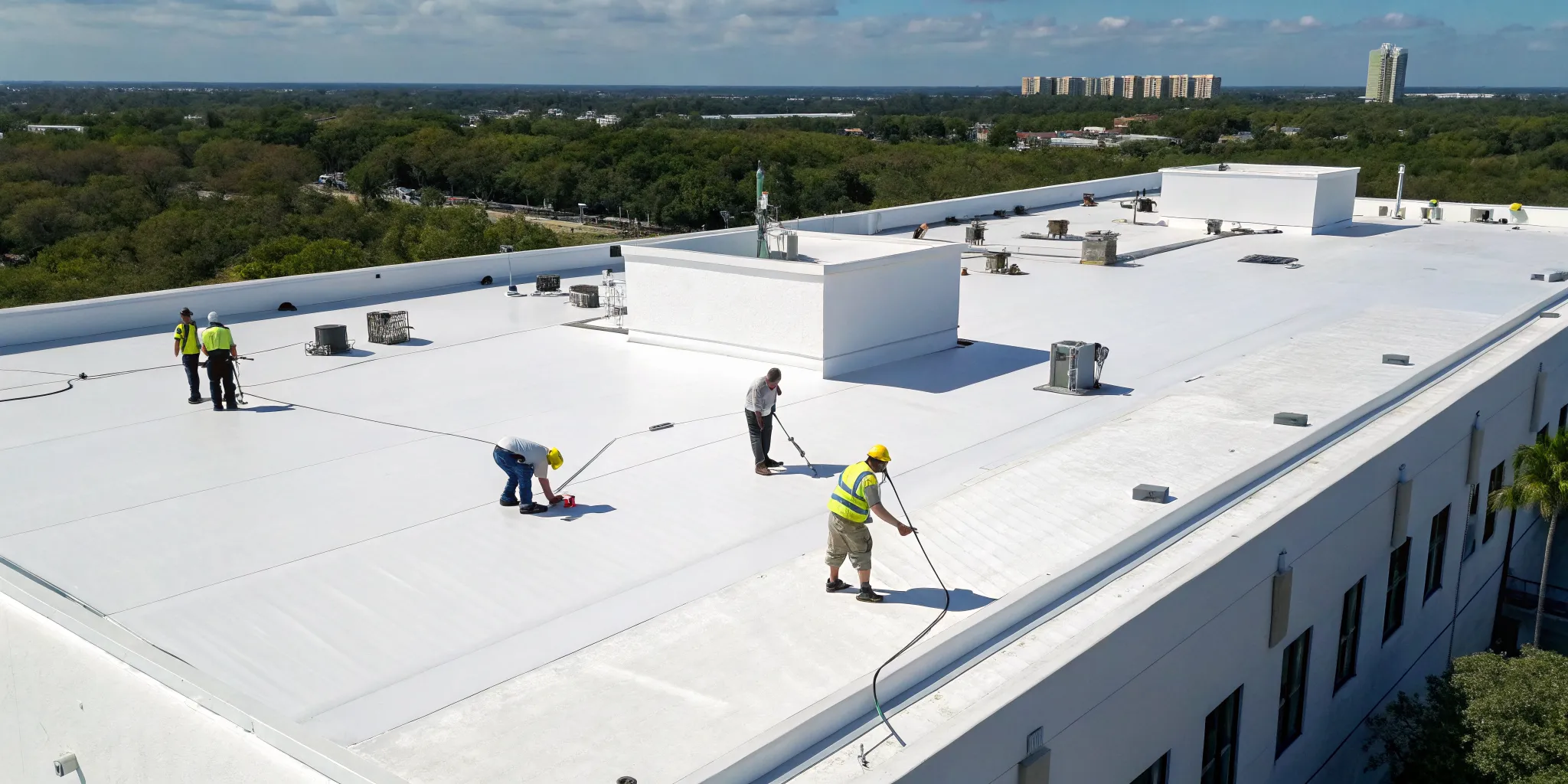
If lowering your cooling costs is a top priority, TPO (Thermoplastic Olefin) is a fantastic option. This single-ply roofing membrane is typically bright white, which means it reflects the sun’s powerful rays instead of absorbing them. What this means for you is a cooler building and lower energy bills during those long, hot Orlando summers. TPO has quickly become one of the most popular materials for commercial roofs because it offers a great balance of performance, affordability, and energy efficiency. It’s a smart, modern solution that can pay for itself over time through energy savings.
PVC: Tough and Chemical-Resistant
PVC (Polyvinyl Chloride) roofing is the tough guy in the flat roofing world. It’s a single-layer material known for its exceptional strength and resistance to punctures, chemicals, and even fire. This makes it an ideal choice for restaurants with grease vents or manufacturing facilities where chemical exposure is a concern. The seams of a PVC roof are heat-welded together, creating a single, watertight sheet across your entire roof. This powerful seal offers incredible protection against leaks. Like TPO, its typically white color also helps reflect heat, contributing to a more energy-efficient building.
Modified Bitumen and Built-Up Roofs
For those who prefer a time-tested, heavy-duty approach, Modified Bitumen and Built-Up Roofs (BUR) are excellent choices. A Modified Bitumen roof is made from layers of asphalt modified with rubbery polymers, giving it added flexibility and durability. Think of it as a modern evolution of the traditional asphalt roof. A BUR system, often called a “tar and gravel” roof, is constructed with multiple layers of asphalt and reinforcing fabrics, topped with a layer of gravel. Both systems are known for creating thick, waterproof, and incredibly durable surfaces that can withstand foot traffic and harsh weather.
How to Choose the Right Flat Roof Contractor in Orlando
Finding the right contractor for your commercial flat roof is a critical decision for your business. The quality of the installation or repair will directly impact your roof’s performance, longevity, and your bottom line. A great contractor not only has the technical skills but also communicates clearly, stands by their work, and understands the specific challenges of Orlando’s climate. Before you sign any contract, it’s essential to do your homework. Taking the time to vet potential contractors thoroughly will protect your investment and give you peace of mind knowing your property is in capable hands. The right partner will help you manage everything from routine maintenance to emergency roof repairs with professionalism and expertise.
Check for Credentials and Licensing
First things first, make sure any contractor you consider is properly licensed and insured in Florida. This is non-negotiable. A license proves they meet state requirements for competency, while insurance protects you from liability in case of accidents on your property. Don’t just take their word for it. As one expert notes, “You should always ask for proof of licensing and insurance from your roofing contractor and verify their validity.” A reputable company will provide this documentation without hesitation. This simple step safeguards your business and ensures you’re working with a legitimate professional who adheres to local building codes and safety standards.
Verify Their Commercial Roofing Experience
Not all roofing experience is created equal. A contractor who primarily works on sloped residential roofs may not have the specialized skills needed for commercial roofing. Flat roofs have unique requirements for drainage, material application, and maintenance. Ask potential contractors about their specific experience with commercial flat roofs in the Orlando area. A professional roofer will be happy to answer your questions and provide a portfolio of their completed projects. Inquire about the types of roofing systems they specialize in (like TPO, EPDM, or PVC) and ask for references from other local business owners. Their answers will reveal their level of expertise and help you find a true specialist.
Ask About Insurance and Warranties
A trustworthy contractor stands behind their work with solid warranties. You should look for two types: a manufacturer’s warranty that covers the materials themselves and a workmanship warranty from the contractor that covers the installation. Understand the terms, duration, and what could potentially void them. Additionally, confirm they carry both general liability insurance and worker’s compensation. This protects you financially if an accident occurs on your property during the project. Many reliable contractors also provide a free, no-obligation hail damage inspection to assess your needs upfront, demonstrating a commitment to transparent, customer-focused service from the very beginning.
Read Reviews and Check References
In the digital age, a company’s reputation is easy to research. Look for online reviews on platforms like Google, Yelp, and the Better Business Bureau. As industry specialists point out, “Strong customer feedback is a clear indicator of a contractor’s reliability and service quality.” While a few negative reviews aren’t always a deal-breaker, pay attention to how the company responds. Do they address concerns professionally? Beyond online reviews, ask the contractor for a list of recent commercial clients you can contact. Speaking directly with past customers gives you firsthand insight into their experience with the contractor’s communication, timeliness, and overall quality of work.
What Does Commercial Flat Roof Repair Cost in Orlando?
When your commercial flat roof needs attention, one of the first questions you’ll have is about the cost. The truth is, there isn’t a single price tag for repairs. The final cost depends on a mix of factors, including the type of roofing material, the size of the damaged area, and how complex the job is. A minor patch on an easily accessible roof will cost significantly less than a major repair on a multi-story building with extensive water damage.
Think of a repair estimate as a detailed diagnosis. A professional roofer needs to perform a thorough inspection to understand the full scope of the problem before providing an accurate quote. This initial assessment is key to identifying not just the obvious leak, but also any hidden issues with the underlying structure or insulation. Understanding the variables involved will help you make an informed decision for your commercial roofing investment and ensure you get a fair price for quality work.
Repair Costs by Roof Material
The material on your flat roof is one of the biggest factors determining repair costs. Different materials require specific tools, products, and expertise, all of which influence the price. On average, you can expect flat roof repairs in the Orlando area to range from $3 to $7 per square foot.
To give you a clearer picture, here’s a general breakdown for common materials:
- EPDM (Rubber Roofing): Repairs typically cost between $5 and $10 per square foot. This material is known for its durability, but patching seams or punctures requires specific adhesives and techniques.
- PVC: As a premium, heat-welded material, PVC repairs often run from $6 to $12 per square foot. The process is more specialized, which contributes to the higher cost.
What Factors Influence the Price?
Beyond the roofing material itself, several other elements can affect your final repair bill. The extent of the damage is the most obvious one; a small puncture is a much quicker fix than addressing a large area of ponding water that has compromised the roof’s membrane and insulation.
Other key factors include:
- Accessibility: A single-story building with an easy-to-access roof will have lower labor costs than a high-rise that requires special equipment for safety.
- Underlying Damage: If water has seeped below the membrane and damaged the insulation or roof deck, those materials will also need to be replaced, adding to the total cost. A professional hail damage inspection can uncover these hidden issues.
- Labor: The complexity of the repair directly impacts the time and skill required from the roofing crew.
Emergency Repairs vs. Scheduled Maintenance
There’s a significant cost difference between proactive maintenance and reactive emergency repairs. A sudden leak during a major storm requires immediate attention, often involving after-hours call-out fees and premium rates for labor. These emergency roof repair services are essential for preventing catastrophic damage, but they are almost always more expensive than planned work.
On the other hand, scheduled maintenance is an investment in prevention. Routine inspections allow a professional to spot and fix minor issues like cracked seals or small punctures before they become major problems. Addressing these small fixes during a scheduled visit is far more cost-effective and helps you avoid the stress and high price tag of an unexpected roofing crisis. Regular upkeep is the best way to protect your building and your budget.
How to Budget for Repairs (and Your Financing Options)
Budgeting for roof repairs doesn’t have to be a guessing game. The most effective strategy is to be proactive. By establishing a regular inspection and maintenance schedule, you can catch small problems early and plan for minor repair costs. This approach helps you avoid being caught off guard by a sudden, expensive failure. Think of it as routine care that preserves the integrity of your roof and prevents costly surprises down the road.
For larger repairs that are unexpected, or if a storm causes significant damage, you have options. If the damage is covered by your insurance, our team can provide roof claim assistance to help you with the process. For out-of-pocket expenses, we also offer convenient financing to ensure you can get the necessary repairs done without delay.
When Should You Repair vs. Replace Your Commercial Flat Roof?
Deciding between a repair and a full replacement for your commercial flat roof is a major financial decision. A quick fix might seem tempting, but it isn’t always the most cost-effective solution in the long run. On the other hand, a premature replacement means spending money you didn’t need to. The right choice depends on several factors, including the age of your roof, the extent of the damage, and your long-term business goals. Understanding the key signs for each option will help you make an informed decision that protects your property and your budget.
Signs You Need a Repair
If the damage to your flat roof is isolated to a specific area, a repair is often the best path forward. Minor issues, when caught early, can be fixed without needing to overhaul the entire system. Look for signs like small leaks or drips after a storm, localized ponding water, or minor punctures or blisters in the roof membrane. Damaged flashing around vents, skylights, or HVAC units is another common problem that typically calls for a targeted repair. Addressing these smaller problems promptly is a cost-effective way to extend your roof’s life. Most minor flat roof repairs can prevent small issues from turning into major, expensive headaches.
Signs You Need a Replacement
Sometimes, a repair is just a temporary patch on a much larger problem. If your roof is consistently springing new leaks, or if you’re scheduling repairs multiple times a year, it’s a strong indicator that the entire system is failing. Widespread issues like large sections of cracked, brittle, or shrinking membrane signal that the roof is nearing the end of its lifespan. Significant structural issues, such as sagging or soft spots, also point toward a necessary replacement. While the cost of a full replacement is higher upfront, it provides a long-term solution that eliminates the cycle of constant repairs and protects your building’s structural integrity for years to come.
How to Assess Your Roof’s Age and Condition
Knowing your roof’s age is the first step in any assessment. Most commercial flat roofs are designed to last between 15 and 30 years, depending on the material and installation quality. If your roof is approaching or has surpassed its expected lifespan, you should start planning for a replacement. The best way to understand its current condition is through routine professional inspections. A qualified contractor can identify subtle signs of wear and tear that you might miss, like failing seams or membrane deterioration. A professional hail damage inspection, for example, can uncover hidden issues after a storm. Regular assessments are essential for catching problems early and making a strategic decision about your roof’s future.
Comparing the Long-Term Costs: Repair vs. Replace
When weighing your options, think beyond the immediate price tag. A series of small repairs can add up over time, eventually costing you more than a single replacement would have. You also need to consider how your choice of material will impact future costs. Some materials are more durable but have a higher initial price, while others may be cheaper to install but require more frequent maintenance. A new roof can also improve your building’s energy efficiency, leading to lower utility bills. While a full replacement is a significant investment, flexible financing options can make it manageable. Ultimately, the goal is to choose the option that offers the best value and protection for your property over the long term.
How Can Regular Maintenance Extend Your Flat Roof’s Lifespan?
Your commercial flat roof is one of your property’s most critical assets, and treating it with a “set it and forget it” mindset can lead to serious trouble. Proactive care is the secret to getting the most out of your investment. Regular maintenance isn’t just about fixing problems as they appear; it’s about preventing them from happening in the first place. A consistent maintenance schedule helps you catch minor issues like small cracks or clogged drains before they escalate into major leaks, structural damage, and expensive, disruptive repairs. By staying ahead of wear and tear, you can significantly extend your roof’s service life, protect your property, and keep your long-term costs down.
The Benefits of Preventive Maintenance
Think of preventive maintenance as a health check-up for your roof. Its main job is to preserve the integrity of your roofing system and act as a powerful defense against costly future repairs. When you catch a small puncture or a deteriorating seal early, the fix is often simple and affordable. If left unchecked, that same small issue could lead to widespread water damage, mold growth, and compromised insulation, resulting in a much larger bill. A well-maintained roof performs better, lasts longer, and provides peace of mind. This proactive approach protects your building and your budget, helping you avoid the high costs and operational headaches that come with emergency roof repairs.
Your Ideal Inspection Schedule for Orlando’s Climate
Here in Orlando, our roofs face a unique set of challenges, from intense UV exposure and high humidity to torrential downpours and the constant threat of hurricanes. That’s why a generic, once-a-year inspection schedule just doesn’t cut it. To properly protect your investment, we recommend professional inspections at least twice a year: once in the spring to prepare for the storm season and again in the fall to assess for any damage. A thorough hail damage inspection after a major storm is also a smart move. This diligent schedule ensures your roof is always ready to handle Florida’s demanding environmental challenges and that any potential vulnerabilities are addressed immediately.
Key Maintenance Tasks to Perform
A professional maintenance visit is much more than a quick walk around the roof. It’s a detailed assessment designed to keep your roof in peak condition. Key tasks include clearing away leaves, branches, and other debris that can clog drains and cause water to pool. Your roofing professional will also inspect the membrane for any signs of cracking, blistering, or punctures that could become leaks. They’ll carefully check the flashing around vents, skylights, and HVAC units, as these are common failure points. Identifying and repairing these small issues early is essential for maintaining the structural integrity of your building and preventing small problems from becoming big ones.
Create a Custom Maintenance Plan
No two commercial roofs are exactly alike. The best maintenance strategy is one that’s tailored specifically to your property. Factors like your roof’s age, the type of material it’s made from, and its exposure to foot traffic or surrounding trees all influence its needs. Working with an experienced contractor to create a custom maintenance plan is the most effective way to protect your asset. A professional can document your roof’s condition, establish a routine inspection schedule, and create a clear plan of action for upkeep. This personalized approach to commercial roofing services can significantly reduce your long-term costs and ensure a safer environment for everyone inside.
Related Articles
- The 5 Main Types of Commercial Flat Roofs
- The Ultimate Guide to Commercial Flat Roof Repair
- 6 Best Flat Roof Repair Materials: A Florida Guide
- The Ultimate Guide to Commercial Roof Replacement
- Find the Best Roofing Contractor for Apartments
Frequently Asked Questions
How often should I have my commercial roof inspected in Orlando? Because of Florida’s intense sun and heavy storm season, we recommend a professional inspection at least twice a year. A good schedule is once in the spring to prepare for summer rains and hurricane season, and again in the fall to check for any damage that occurred. It’s also wise to schedule an inspection after any major weather event, like a hailstorm, to catch hidden problems.
Can a new, energy-efficient roof really lower my cooling costs? Yes, it absolutely can. Materials like TPO and PVC are often white or light-colored, which allows them to reflect the sun’s UV rays instead of absorbing them as heat. This means your building stays cooler naturally, so your HVAC system doesn’t have to work as hard. Over time, the reduction in your monthly energy bills can make a significant financial impact.
My roof is old but isn’t leaking. Do I need to do anything? Even without active leaks, an aging roof can have underlying issues. Materials naturally degrade over time from constant sun exposure, becoming brittle or cracked. It’s best to have an older roof professionally assessed to understand its current condition. This allows you to budget for a future replacement proactively instead of being surprised by a sudden, major failure.
What is the most common cause of flat roof leaks in Florida? The most frequent culprits are poor drainage and membrane failure. When drains get clogged with leaves and debris, water pools on the roof’s surface, which speeds up deterioration and puts stress on the structure. Over time, constant exposure to the sun and rain can also cause the roof’s protective membrane to crack or split, creating direct paths for water to enter your building.
How do I know if storm damage is serious enough to call a professional? You should always call for a professional inspection after a significant storm, even if you don’t see an obvious leak. High winds can lift the edges of the roofing material, and hail can create small punctures or dents that are difficult to spot from the ground. These seemingly minor issues can allow water to seep in slowly, causing hidden damage to your insulation and roof deck over time.