


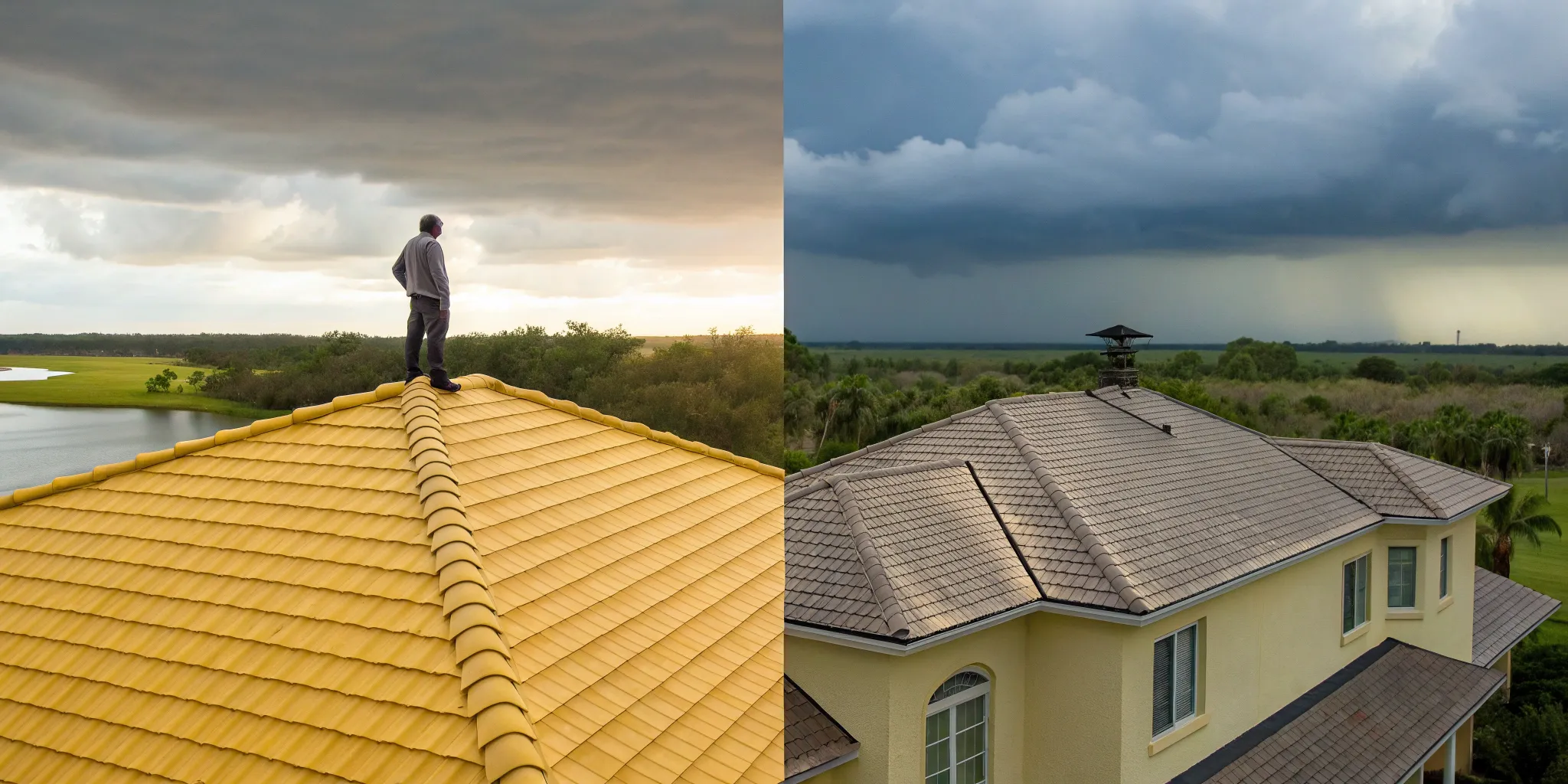
A damaged roof doesn’t just threaten your property; it disrupts your peace of mind. Every time the forecast calls for a classic Florida storm, you’re left wondering if that old patch will hold. The decision to repair or replace is about more than just the immediate cost—it’s about choosing a solution that lets you feel secure in your own home. While a repair might solve the problem for now, a full replacement offers a lasting solution with a brand-new warranty. This guide provides a straightforward repair vs replace cost analysis to help you find the option that best protects both your budget and your sense of security.
Key Takeaways
- Compare long-term value, not just upfront cost: A quick repair might seem cheaper now, but frequent fixes add up. Weigh the one-time investment of a replacement against the total cost of multiple repairs on an aging roof.
- Treat the 30% rule as a critical checkpoint: When a repair quote nears 30% of the cost of a new roof, a full replacement often becomes the smarter financial move. This guideline helps you avoid spending good money on a system that’s already failing.
- Base your decision on a professional inspection: You can’t make the right financial choice without knowing the full extent of the damage. An expert assessment provides an accurate diagnosis, helping you avoid costly surprises and make a truly informed decision.
Repair or Replace Your Roof: How to Make the Right Financial Choice
When you’re facing a leaky or damaged roof, the big question is always whether to repair it or go for a full replacement. This isn’t just a practical decision; it’s a significant financial one that can impact your budget for years. Choosing a simple repair might seem like the easy way out, but it can sometimes be like putting a bandage on a problem that needs surgery. On the other hand, a full replacement is a major investment, but it offers a long-term solution and peace of mind.
The best path forward depends entirely on your roof’s specific situation—its age, the materials it’s made of, and the kind of damage it has sustained. A few missing shingles after a storm might only require a straightforward residential roofing repair. But if you’re dealing with widespread issues or an older roof that’s nearing the end of its life, a replacement might be the smarter financial move. It’s about looking beyond the immediate problem and considering the health of your entire roofing system. Understanding the difference and weighing the long-term costs against the short-term savings is the key to protecting your property without overspending.
Why this decision is so important
At first glance, a repair almost always looks like the more affordable option. For minor or moderate damage, a targeted fix is typically more cost-effective and gets your life back to normal faster. However, the initial price tag doesn’t tell the whole story. If your roof requires frequent patching, those “less expensive” repairs can add up quickly, eventually costing you more than a replacement would have in the first place. The goal is to find the sweet spot between a quick fix and a lasting solution. Making the right call protects your home and your wallet, ensuring you get the most value out of your investment.
The real cost of getting it wrong
Choosing incorrectly between repair and replacement can lead to some expensive consequences. Opting for a patch when you really need a new roof can lead to recurring leaks, hidden water damage, mold growth, and even structural problems. Delaying a necessary replacement often means the problem gets worse, and the final bill gets bigger. Believing common roofing myths can also lead you down the wrong path, resulting in premature repairs or missed opportunities to extend your roof’s lifespan. The cost of a bad decision isn’t just the money you spend on the initial fix; it’s the price of all the potential damage that follows. That’s why a thorough hail damage inspection is so critical.
Key Factors in Your Repair vs. Replace Decision
Deciding whether to patch up a problem or invest in a full replacement can feel overwhelming. It’s not just about the upfront cost; it’s about long-term value, safety, and peace of mind. A quick fix might seem appealing now, but if it leads to more issues down the road, it can end up costing you more in both money and stress. On the other hand, a full replacement is a significant investment, and you want to be sure it’s the right call.
To make the best choice for your property, you need to look at the full picture. By breaking down the decision into a few key areas, you can move forward with confidence, knowing you’ve considered all the important angles. Let’s walk through the four main factors that will guide your decision from a practical, long-term perspective.
Assess your roof’s age and condition
The age of your roof is a critical starting point, but it doesn’t tell the whole story. Many roofs, even older ones, can be cost-effectively repaired to extend their life by several years. However, if your roof is approaching the end of its typical lifespan—often 20-25 years for asphalt shingles in the Florida sun—a replacement might be the more sensible long-term investment. Constant repairs on an aging roof can become a financial drain. A professional inspection can determine if the underlying materials are still in good shape or if age-related wear and tear make a full replacement the smarter financial move for your residential roofing system.
Evaluate the extent of the damage
The scope of the damage is often the clearest indicator of whether you need a repair or a replacement. Small, isolated issues like a few missing shingles or a minor leak are perfect candidates for a simple repair. But when the damage is widespread, a replacement is usually the better option. For instance, if a recent storm has caused significant granule loss on your shingles or if you’re dealing with extensive water damage that has compromised the roof deck, patching it up won’t solve the underlying problem. A thorough hail damage inspection can reveal the true extent of the issue, helping you avoid frequent and costly callbacks for recurring problems.
Check for safety and code compliance
Building codes are updated regularly to improve safety, especially here in Central Florida where hurricane-readiness is key. If your roof is older, it may not meet current standards for wind resistance or installation methods. A major repair or replacement project requires your roof to be brought up to code, which is a non-negotiable for your family’s safety and for your insurance policy to remain valid. This also includes ensuring that any electrical components near the roof are handled safely during the process. Working with a qualified roofing contractor ensures that all work is permitted and compliant, protecting you from future liabilities and potential issues.
Consider your roof’s energy efficiency
An old, poorly insulated roof can be a major source of energy loss, leading to higher-than-necessary cooling bills. This is a significant factor for both homeowners and owners of commercial roofing systems. While a repair might fix a leak, it won’t improve your roof’s overall thermal performance. A full replacement, on the other hand, allows you to install modern, energy-efficient materials and proper ventilation that can significantly reduce your energy consumption. The long-term energy savings can help offset the initial cost of the new roof, providing a clear return on your investment while keeping your building more comfortable year-round.
How to Accurately Compare Costs
Making a sound financial decision about your roof means looking beyond the initial price tag. A cheap repair might seem like a win today, but it could lead to a cycle of costly fixes down the road. On the other hand, a full replacement is a significant investment, and you want to be sure it’s the right move. To truly understand the financial impact, you need to compare the long-term value of each option, not just the upfront expense.
This involves a bit of detective work. You’ll need to look at the total cost of repairs over time versus the one-time cost of a new roof. Think about factors like future maintenance, energy savings, and how each choice affects your property’s value. It’s also important to consider things that don’t show up on an invoice, like the disruption to your home or business. By taking a comprehensive look at all the numbers—both obvious and hidden—you can make a choice that protects your property and your budget for years to come.
Gather the right information
Before you can compare numbers, you need to collect the right details. Start with what you already know about your roof. Find any records you have, like its installation date, past repair invoices, and original warranty documents. This history gives you a clear picture of its performance over time. Next, you’ll need a professional assessment to understand its current state. A thorough hail damage inspection or general evaluation will uncover the full extent of any issues, including problems you can’t see from the ground. This expert report is the foundation for an accurate cost comparison.
Calculate the true cost of repairs vs. replacement
Now, let’s talk numbers. The cost of a repair includes more than just the initial quote. You need to add up the price of materials, labor, and the potential for future repairs. If your roof has had recurring issues, it’s wise to budget for more service calls. For a replacement, the main cost is the upfront investment in a new residential roofing system. While this number is higher, it often comes with long-term savings since you won’t be paying for frequent fixes. The goal is to compare the total anticipated cost of repairs over the next few years against the one-time cost of a full replacement.
Factor in downtime and disruption
Time is money, especially for business owners. A leaky roof can damage inventory, shut down operations, and create an unsafe environment for customers and employees. Even for homeowners, a major roofing project can be disruptive. While simple repairs cause minimal interruption, a full replacement is a bigger project. You need to weigh the short-term inconvenience of a replacement against the potential for repeated, unexpected disruptions from a failing roof, which might even require an emergency roof repair. A planned replacement allows you to schedule the work on your terms, minimizing the impact on your daily life or business operations.
Don’t forget to include warranty coverage
Warranties are a critical piece of the financial puzzle. Check if your current roof is still under warranty, as it might cover some repair costs. However, keep in mind that some repairs can void an existing manufacturer’s warranty. A new roof, on the other hand, comes with brand-new, comprehensive warranties for both materials and workmanship. This protection provides peace of mind and significant financial security for decades. This long-term coverage is a valuable asset that adds to the overall value of a roof replacement, and flexible financing options can make this investment more manageable.
What Is the 50% Rule?
You’ve likely heard of the “50% rule” when deciding whether to fix a major appliance or even a car. The guideline is simple: if a repair costs more than half the price of a replacement, you should probably replace it. It’s a straightforward, numbers-based way to approach the decision and gives you a quick gut check on your investment. But for something as complex as your roof, this rule is more of a starting point than a final answer. It helps frame the financial side of the choice, but it doesn’t tell the whole story about your roof’s health or long-term value.
How the basic calculation works
The math is easy. If a full roof replacement costs $20,000 and you get a repair quote for $11,000, you’re over the 50% mark. According to the rule, you should lean toward replacement. This calculation is designed to prevent you from sinking money into an aging asset that might continue to cause problems down the road. It’s a quick way to gauge whether a repair is financially practical or if you’d be better off putting that money toward a long-term solution that comes with a brand-new warranty.
The limits and myths of the 50% rule
This is where a simple rule can get you into trouble. The 50% guideline doesn’t consider your roof’s age, the quality of the proposed repair, or if your needs have changed—like wanting a more energy-efficient material. It also ignores the value a high-quality repair adds or how it might extend your roof’s life. Relying on it alone means you could miss the bigger picture of your roof’s overall health, which is why a professional hail damage inspection is so important for getting the full story before making a decision.
When this guideline is most helpful for roofing
For roofing, many professionals use a lower threshold. A more common benchmark is the 30% rule. If your repair costs approach 30% of a new roof’s price, it’s time to seriously consider a replacement. Why the lower number? Because a full residential roofing replacement is a complete system upgrade. It comes with a comprehensive warranty, predictable long-term costs, and better energy efficiency. A major repair only patches one area, leaving the rest of your aging roof vulnerable. Think of the 30-50% range as your signal to dig deeper and get an expert opinion.
Beyond the 50% Rule: Other Ways to Decide
The 50% rule is a decent starting point, but it’s like trying to understand a whole book by only reading the first chapter. It gives you a hint, but you’re missing the full story. Making a truly smart financial decision about your roof means looking beyond a single repair bill and considering the long-term picture. This is where you can feel confident you’re not just patching a problem, but making a sound investment in your property.
Thinking about concepts like total cost of ownership, lifecycle cost, and return on investment might sound complicated, but they’re really just practical ways to weigh your options. These frameworks help you compare the immediate cost of a repair against the long-term value of a replacement. By looking at future maintenance, energy savings, and how each choice affects your property’s value, you can see which path truly saves you money and prevents future headaches. It’s about shifting your perspective from “How much will this cost me today?” to “What is the wisest use of my money for the years to come?”
Analyze the total cost of ownership
The price tag on a repair quote isn’t the whole story. The total cost of ownership (TCO) includes every expense related to your roof, not just the immediate fix. Think of it as the initial cost plus all the ongoing expenses that come with it. This includes future maintenance, potential operational costs from things like poor energy efficiency, and the price of unexpected downtime if a small problem becomes a major one. A quick, cheap patch might seem like a win, but if you’re calling for an emergency roof repair every time a storm rolls through, the TCO of that “affordable” fix will quickly add up.
Evaluate your roof’s lifecycle cost
Lifecycle cost takes the idea of TCO a step further by looking at all the expenses over your roof’s entire lifespan, from installation to the day it’s replaced. To make a truly informed decision, you should calculate all the costs associated with owning the roof. A new, high-quality commercial roofing system might have a higher upfront cost, but if it lasts 10 years longer and requires fewer repairs than a cheaper alternative, its overall lifecycle cost could be significantly lower. This approach helps you see your roof as a long-term asset and choose the option that delivers the most value over time.
Calculate your return on investment (ROI)
Your roof is an investment, and every financial decision you make about it should offer a solid return. Calculating the return on investment (ROI) helps you see what you’re getting back for your money. A full roof replacement can provide returns in several ways: it can increase your property value, lower your monthly energy bills with more efficient materials, and eliminate the recurring cost of repairs. Some industry experts suggest that if a repair’s total cost is less than 15% of the replacement cost, fixing it may be the more financially sound choice. For larger projects, understanding the ROI can make the decision clear, and flexible financing can help you manage the investment.
Thinking Long-Term: How Your Choice Affects the Future
The immediate cost is a big piece of the puzzle, but it’s not the whole picture. The decision to repair or replace your roof will have ripple effects for years to come. Thinking about the long-term implications—from future costs to your property’s value—helps you make a choice you’ll be happy with down the road. It’s about investing wisely in your property’s safety, efficiency, and overall health. Let’s look at how your decision today shapes your tomorrow.
Future maintenance and reliability
A quick repair might seem like the easy way out, but it can sometimes be a temporary fix for a deeper issue. If your roof has underlying problems, you could find yourself in a cycle of patching one spot only for another to appear. These recurring repairs add up, costing you more money and time than you initially planned. A full replacement, on the other hand, resets the clock. It gives you a reliable, low-maintenance roof and the peace of mind that comes with knowing your property is protected from unexpected leaks or failures that could lead to an emergency roof repair.
Potential energy and utility savings
Your roof plays a huge role in your home’s energy efficiency, especially here in the Florida heat. Older or damaged roofs often lack the modern materials and technology that help keep your home cool. A new roof can significantly lower your energy bills by reflecting solar heat and improving insulation. When you choose a full replacement for your residential roofing, you’re not just getting a new layer of shingles; you’re upgrading your home’s entire thermal envelope. This investment often pays for itself over time through consistent savings on your monthly utility bills.
The impact on your property value
A new roof is one of the most valuable upgrades you can make to your property. It instantly improves curb appeal and signals to potential buyers that the building is well-cared-for. If you’re planning to sell in the next few years, a new roof can directly increase your property’s resale value and make it more attractive on the market. Conversely, an old roof with a history of repairs can be a major red flag for buyers and inspectors. Investing in a quality replacement for your commercial roofing system protects your asset and ensures you get the best possible return.
Differences in warranty protection
Warranty coverage is a critical safety net, and it’s one of the biggest differences between repairing and replacing your roof. A full roof replacement typically comes with robust, long-term warranties from both the material manufacturer and the installer. This covers you for years against defects in materials and workmanship. Repairs, however, usually come with a much shorter guarantee that only applies to the specific area that was fixed. A comprehensive warranty provides predictable protection and financial security, which is something a simple patch job just can’t offer when you need roof claim assistance.
How Financing and Insurance Play a Role
The cost to repair or replace your roof is just one part of the financial picture. How you actually pay for the work—whether out of pocket, through a loan, or with an insurance claim—is just as important. A major roof project is a significant investment, and understanding your funding options can make the difference between a stressful experience and a smooth one. Before you decide, look into the financial tools available. This gives you a clearer view of what each choice means for your budget and helps you move from asking, “What will this cost?” to “How can I best manage this cost?”
Your financing and payment options
Let’s be direct: a full roof replacement is a major expense, with costs often ranging from $15,000 to over $28,000. Most of us don’t have that kind of cash just sitting around, which is where financing becomes a powerful tool. Instead of draining your savings, you can spread the cost over time with manageable monthly payments. Many roofing companies understand this and offer convenient financing options to make the project affordable. This allows you to get the safe, reliable roof you need without putting your financial health at risk.
Using your insurance and getting claim help
Before assuming you’ll pay for everything yourself, check your homeowner’s insurance policy. Many policies cover roof damage from specific events like hail or high winds. A successful claim can dramatically reduce your out-of-pocket expenses, making a replacement much more accessible. The claims process can be complicated, though. Working with a roofer who offers roof claim assistance is a huge help. They know what insurance adjusters look for and can help you document the damage properly to support your claim.
What this means for your cash flow
Thinking about your cash flow helps clarify the repair vs. replace debate. A simple repair has a low upfront cost, which is great for your immediate budget. But if your roof needs frequent fixes, those small costs add up and create a steady drain on your finances. A full replacement is a larger initial investment, but it can protect your cash flow in the long run. You get a brand-new roof with a solid warranty, which means fewer surprise repair bills. This predictability makes it easier to budget and manage your money over time.
Common Myths That Can Cost You Money
Making a decision about your roof based on misinformation can be a costly mistake. Many homeowners fall for common myths that lead to premature repairs, expensive replacements, or missed chances to extend their roof’s lifespan. It’s easy to get caught up in what seems like common sense, but when it comes to an asset as important as your roof, what you don’t know can definitely hurt you—and your wallet.
Believing that a quick fix is always best or that a small problem can wait can turn a manageable issue into a major catastrophe. These misconceptions often lead property owners down a path of recurring problems and escalating expenses. Before you decide whether to repair or replace your roof, it’s crucial to separate fact from fiction. Let’s clear up a few of the most persistent—and expensive—roofing myths so you can make a choice that protects both your property and your budget. Understanding the truth behind these ideas is the first step toward a smart, long-term investment in your home or business.
Myth: Repairs are always the cheaper option
It’s easy to see why this myth is so popular. A repair bill is almost always smaller than a replacement estimate, making it seem like the obvious financial choice. While repairs are great for minor or moderate damage, they can become a money pit if your roof has widespread issues or is nearing the end of its life. If you find yourself scheduling frequent repairs, those costs can quickly add up. For extensive damage, a full residential roofing replacement is often the more cost-effective solution in the long run, saving you from the cycle of constant fixes and giving you peace of mind.
Myth: You can ignore hidden costs and future problems
What you see on the surface of your roof is only part of the story. Underneath the shingles, there could be water damage, rotting decking, or poor ventilation that a simple patch job won’t fix. Ignoring these underlying issues is a recipe for disaster, leading to much more expensive structural problems down the road. A professional roofing contractor can identify and address these hidden problems during an inspection. By getting a complete picture of your roof’s health, you can avoid the common mistakes that lead to premature failure and costly surprises later on.
Myth: The surface damage is all that matters
A few missing shingles or a small leak might not seem like a big deal, but they can be symptoms of a much larger problem. The condition of your roof’s surface doesn’t always reflect the health of the entire system. Issues with flashing, underlayment, or structural supports can go unnoticed until they cause significant damage. Believing that only visible damage matters can lead you to make a decision that doesn’t solve the root cause of the problem. A thorough hail damage inspection can uncover the full extent of the issue, ensuring you address everything at once.
Myth: Waiting to decide won’t hurt
When it comes to roofing issues, time is not on your side. Procrastinating on a repair or replacement decision allows problems to get worse. A small leak can saturate insulation, damage drywall, and even lead to mold growth. The longer you wait, the more extensive and expensive the damage becomes. The cost to fix your roof will almost always be lower the sooner you identify and resolve the problem. If you notice an issue, it’s best to act quickly and get a professional assessment to prevent a minor headache from turning into a major financial burden.
When to Call in a Roofing Expert
Deciding between repairing and replacing your roof involves a lot of variables, and sometimes, you just can’t see the full picture from the ground. While it’s tempting to make a quick judgment call, certain situations absolutely require a professional opinion. An expert can provide a thorough evaluation that goes beyond surface-level issues, saving you from costly mistakes and giving you peace of mind. Knowing when to pick up the phone is the first step toward making a smart, informed decision for your property.
For complex damage assessments
What looks like a few missing shingles could be a sign of a much deeper problem. After a major storm, for example, it’s difficult for a homeowner to spot every issue. A professional can identify hidden damage, like compromised underlayment or structural weaknesses that aren’t visible to the untrained eye. They have the experience to trace a leak back to its source and assess the full extent of the problem. Getting a hail damage inspection from a qualified contractor ensures that you address the root cause, not just the symptoms, for a solution that truly lasts.
For help with insurance claims
Filing an insurance claim for roof damage can be a frustrating and confusing process. Insurance companies require specific documentation and evidence to approve a claim, and homeowners often struggle to provide what’s needed. A knowledgeable roofing expert works with insurance adjusters regularly and understands exactly what they’re looking for. They can provide a detailed report, complete with photos and accurate estimates, to substantiate your case. Getting professional roof claim assistance can make the difference between a denied claim and receiving the full compensation you deserve for your roof repairs or replacement.
If you have a specialized roofing system
Not all roofs are created equal. Materials like tile, metal, or the flat roofing systems common on commercial buildings require specific tools, techniques, and expertise. Hiring a roofer who isn’t experienced with your particular type of roof can lead to improper repairs, further damage, or even a voided warranty. An expert who specializes in your roofing material will know how to handle it correctly, ensuring the work is done right the first time. Whether you have a unique residential roof or one of the many commercial roofing systems, always work with a team that has proven experience with that specific type.
Create Your Decision-Making Framework
Making a big financial decision under pressure is tough. When your roof is leaking, it’s easy to rush into a choice based on stress rather than strategy. That’s why creating a simple decision-making framework is so helpful. It’s not about complicated spreadsheets; it’s about having a clear, logical path to follow so you can compare your options objectively. This process helps you cut through the noise and focus on what truly matters for your property, your budget, and your peace of mind.
By breaking the decision down into manageable steps, you can weigh the costs and benefits of repairing versus replacing your roof with confidence. You’ll be able to see the full picture—not just the immediate expense, but the long-term value and potential savings. This structured approach ensures you’re not just fixing a problem for today, but making a smart investment in your property’s future. It also gives you a solid foundation for conversations with roofing contractors and insurance adjusters, ensuring you can advocate for the best possible outcome.
Build a step-by-step process
First, gather all the information you can. This includes any past repair invoices, your roof’s warranty details, and a professional inspection report. Next, get detailed quotes that outline the full cost of repairs, including labor, materials, and potential hidden damage. Then, get a separate quote for a full replacement. This should cover not just the new roof but also the cost of removing and disposing of the old one. Finally, consider other factors like the disruption to your daily life and the long-term benefits of a new, more energy-efficient residential roofing system.
Document your findings for later
Keep all your documents organized in one place, whether it’s a physical folder or a digital one on your computer. This file should contain photos of the damage, copies of all inspection reports, and every quote you receive from contractors. Having everything together makes it much easier to compare your options side-by-side. This documentation is also incredibly valuable if you need to file an insurance claim. A well-organized file demonstrates that you’ve done your due diligence and provides the evidence needed to support your request for roof claim assistance.
Set clear rules for your final decision
A helpful guideline many property owners use is the “50% rule.” If the cost to repair your roof is 50% or more of the cost of a full replacement, it’s usually more financially sound to replace it. Another clear sign is the frequency of repairs. If you find yourself calling for an emergency roof repair every time a storm rolls through, those costs are adding up. When the cumulative cost of patching and fixing your roof starts to approach the price of a new one, a replacement becomes the smarter long-term investment.
Related Articles
- Average Cost to Replace a Roof Per Square Foot (2025)
- Wind Damage Roof Repair: A Step-by-Step Guide
- Roof Storm Damage Repair: A Homeowner’s Guide
- The Real Cost to Replace an Asphalt Shingle Roof
- Roof Replacement Cost: A Complete Breakdown
Frequently Asked Questions
My roof is only 10 years old, but it has some damage. Should I automatically repair it? Not necessarily. While age is an important factor, the type and extent of the damage matter more. A relatively young roof can suffer significant damage from a single storm that compromises the entire system. If the damage is widespread or affects the underlying structure, a replacement might be the more sensible long-term financial decision, even if the roof hasn’t reached the end of its typical lifespan.
How can I tell if damage is ‘widespread’ enough to need a replacement instead of just a repair? “Widespread” damage isn’t just about how many shingles are missing. It can refer to issues across the entire roof surface, like significant granule loss that weakens your shingles, multiple active leaks in different areas, or damage that has compromised the underlying roof deck. Since many of these problems aren’t visible from the ground, the most reliable way to know for sure is to have a professional conduct a thorough inspection.
Will my insurance cover a full roof replacement if only part of it is damaged? This depends entirely on your specific policy and the nature of the damage. In some cases, if a repair can’t be made with matching materials or if the damage compromises the integrity of the whole roof, an insurance company may approve a full replacement. Navigating this process can be tricky, which is why working with a roofing expert who can properly document the damage and assist with your claim is so valuable.
Is the 30-50% rule the only financial guideline I should use? Think of it as a helpful starting point, not a strict command. If a repair quote is approaching 30% of the cost of a new roof, it’s a strong signal to look deeper. A better approach is to consider the total cost of ownership. A new roof might be a larger upfront investment, but it eliminates the recurring costs of repairs, can lower your energy bills, and comes with a new warranty, which often makes it the smarter financial choice over the long haul.
Besides stopping leaks, what are the real long-term benefits of choosing a replacement over a major repair? A full replacement is a complete system upgrade that offers several lasting advantages. You’ll likely see a noticeable decrease in your cooling bills due to modern, energy-efficient materials. It also significantly improves your home’s curb appeal and can increase its resale value. Perhaps most importantly, a new roof comes with comprehensive manufacturer and workmanship warranties, giving you financial protection and peace of mind for decades.