For a business owner, few things are more disruptive than an unexpected roofing emergency. A sudden failure can halt operations and lead to chaotic, expensive repairs. The smartest approach is a proactive one. Planning for your roof’s eventual replacement allows you to control the timeline, budget effectively, and make the best long-term decisions for your property without the pressure of a crisis. This guide is for the forward-thinking property owner who wants to get ahead of the problem. We’ll explore how to choose the right materials for longevity, what to look for in a contractor, and how to finance the project, making your next commercial roof replacement Orlando FL a smooth, strategic upgrade.
Key Takeaways
- Select roofing materials built for Florida’s weather: Prioritize durable and reflective options like TPO, PVC, or metal that can handle intense sun, heavy rain, and high winds while also helping to lower your cooling costs.
- Hire a qualified local contractor: Look past the lowest bid and focus on finding a professional with proper Florida licensing, comprehensive insurance, and proven experience with local building codes to ensure a quality installation.
- Plan your budget for long-term value: A new roof is a major investment, so look for opportunities to improve energy efficiency and explore financing or insurance claim assistance to make the project more manageable without sacrificing quality.
What Is a Commercial Roof Replacement?
A commercial roof replacement is a complete overhaul of your building’s roofing system. It involves more than just patching up a few problem spots; it means removing the old, worn-out materials and installing a brand-new roof. This process is the best solution when your current roof is past its prime or has damage too extensive for simple repairs. Think of it as a long-term investment in your property’s safety and structural integrity. A new roof protects your inventory, equipment, employees, and customers from the elements.
Deciding to replace your roof is a major step, but it’s often the most cost-effective choice when constant repairs are draining your maintenance budget. A full replacement also gives you the opportunity to upgrade to modern, more durable materials that can better withstand Florida’s intense sun and storm seasons. For many Orlando business owners, this is a chance to improve their building’s energy efficiency, which can lead to lower cooling costs down the line. A properly installed commercial roofing system is a fundamental asset that keeps your business running smoothly.
Signs It’s Time for a New Commercial Roof
Not sure if you need a few repairs or a full replacement? Your roof will usually give you some clear signals. One of the most obvious signs is persistent leaks or widespread water damage inside your building. You might also notice visible sagging in the roof deck, which indicates a serious structural issue. Other red flags include the smell of mold or mildew, bubbling or blistering on the roof’s surface, and seams that are starting to pull apart. If your roof is over 20 years old or if more than a quarter of it is damaged, a replacement is almost always the smarter financial move. A professional hail damage inspection can also reveal hidden problems that point to a need for a new roof.
How Commercial and Residential Replacements Differ
While they both serve the same basic function, commercial and residential roofing projects are worlds apart. The biggest difference lies in the design. Most commercial buildings have flat or low-sloped roofs, while homes typically have steep-sloped roofs. This structural distinction requires completely different materials and installation techniques. Commercial roofs often use materials like TPO, EPDM, or PVC membranes designed to handle standing water and heavy foot traffic. In contrast, residential roofing commonly uses shingles or tiles. The scale and logistics of a commercial project are also far more complex, involving specialized equipment and adherence to different building codes.
Popular Commercial Roofing Materials for Orlando Businesses
Choosing the right material for your commercial roof is a big decision, especially in a place like Orlando. You need something that can handle the intense sun, heavy rains, and occasional hurricane-force winds. The best material for your property will balance durability, energy efficiency, and your budget. Getting familiar with the most common options is the first step toward making a smart investment that protects your business for years to come.
Let’s look at four of the most popular and effective commercial roofing materials suited for Central Florida’s unique climate.
TPO Roofing Systems
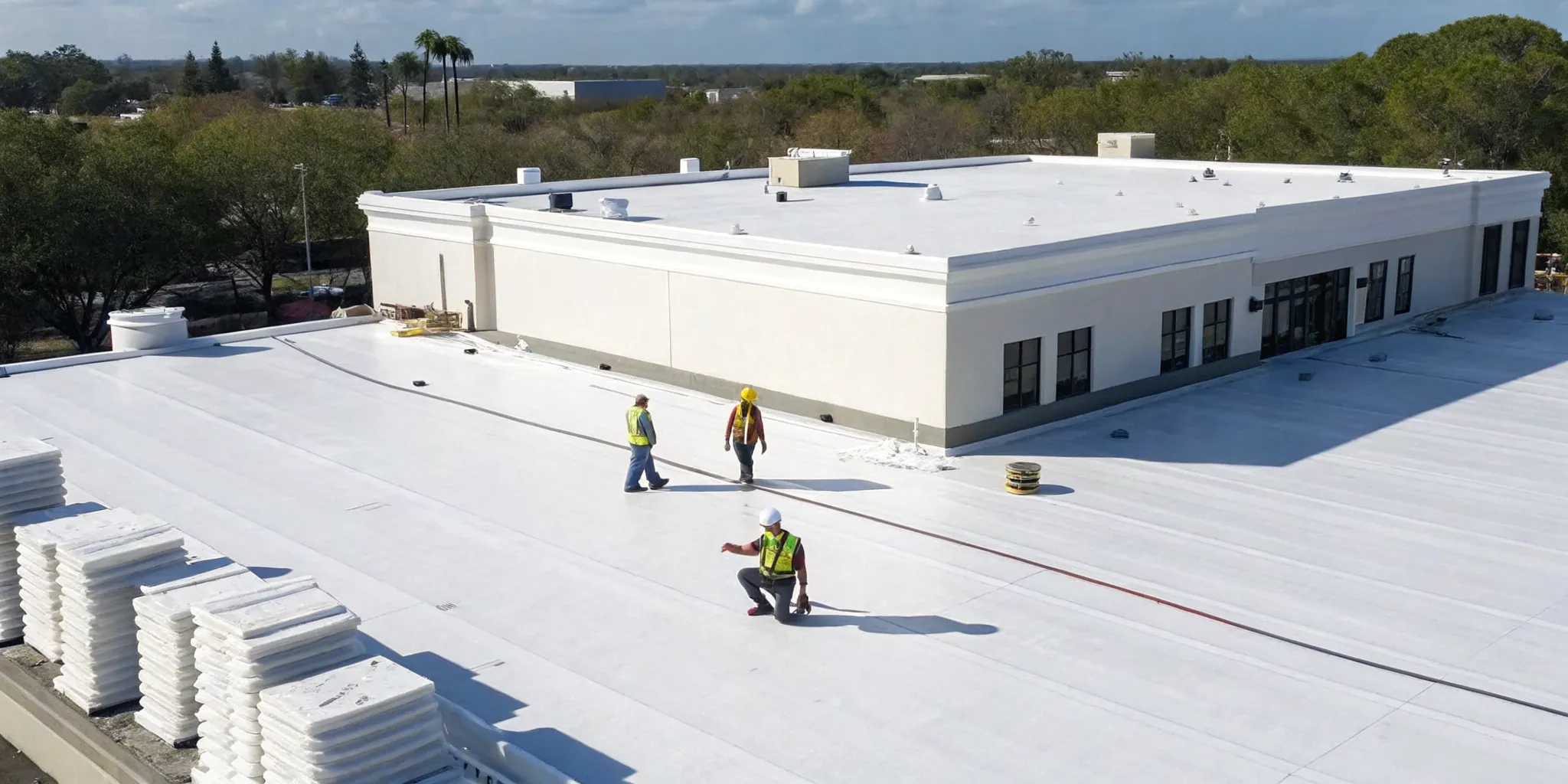
TPO (Thermoplastic Olefin) roofing is a fantastic choice for many Florida businesses. It’s a single-ply membrane known for being both durable and cost-effective. One of its biggest advantages is its reflective surface, which is typically white or a light color. This helps bounce the sun’s rays away from your building, which can significantly lower your cooling costs during those long, hot summers. TPO is also resistant to punctures, tears, and chemical exposure, making it a resilient option for flat or low-slope roofs. Its heat-welded seams create a strong, unified surface that holds up well against heavy rain.
EPDM Rubber Roofing
EPDM (Ethylene Propylene Diene Monomer) is a synthetic rubber roofing membrane that has been a trusted choice for decades. Think of it as a highly durable, flexible sheet that provides excellent protection. Its primary strength is its resistance to extreme weather, from intense UV radiation to hail. This makes it a reliable shield for your property. EPDM is also known for its long lifespan, often lasting 30 years or more with proper maintenance. Because it’s so flexible, it can expand and contract with temperature changes without cracking, which is a huge plus in Florida’s fluctuating climate. It’s a proven, dependable material for any business needing a long-term roofing solution.
Metal Roofing Options
When you think of strength and longevity, metal roofing should come to mind. It’s one of the toughest materials available and can easily withstand Florida’s harshest weather conditions, including high winds. While the initial investment might be higher than other options, a metal roof can last 50 years or more, making it a great long-term value. Metal roofs come in various materials, like steel and aluminum, and a wide range of styles and colors to match your building’s aesthetic. They are also fire-resistant and energy-efficient, especially when coated with reflective paint, helping you save on insurance and energy bills.
PVC Roofing Membranes
PVC (Polyvinyl Chloride) is another excellent single-ply roofing membrane, prized for its exceptional durability. It’s highly resistant to fire, chemicals, and strong winds, making it a top-tier choice for restaurants, manufacturing facilities, and other businesses where these factors are a concern. Like TPO, PVC roofs have heat-welded seams that form a permanent, watertight bond, offering superior protection against leaks during Florida’s rainy season. This robust construction helps prevent the need for emergency roof repair. PVC is also highly reflective and energy-efficient, contributing to a cooler building and lower utility costs over its long lifespan.
How Much Does a Commercial Roof Replacement Cost in Orlando?
Let’s talk about the big question on every property owner’s mind: how much will this cost? Budgeting for a commercial roof replacement is a significant step, and the final price tag depends on several key variables. While every project has its own unique requirements, understanding the main cost components will help you plan effectively and make a confident decision for your business. A new roof is a major investment in your property’s safety and value, so it’s important to know what to expect. We’ll break down the typical costs for a commercial roof replacement in the Orlando area so you can feel prepared for the process.
Average Costs by Material Type
The material you select for your roof is the single biggest factor driving the total cost. Different materials come with varying price points, lifespans, and levels of durability, especially against Florida’s unique weather. Here are some typical price ranges for popular commercial roofing materials in Orlando, keeping in mind these are estimates for an average-sized roof:
- Architectural Shingles: $9,000 – $14,000 (lasts 25-30 years)
- Impact-Resistant Shingles: $12,000 – $17,000 (lasts 30+ years)
- Concrete Tile: $16,000 – $24,000 (lasts 40-50 years)
- Standing Seam Metal: $18,000 – $30,000 (lasts 40-70 years)
- Clay Tile: $20,000 – $32,000 (lasts 50+ years)
Your roofing contractor can walk you through the benefits of each option, helping you find the perfect balance between your property’s needs and your budget.
Key Factors That Influence Your Final Price
Beyond the materials, several other elements will shape your final quote. The size and steepness of your roof are primary considerations, as larger or more complex structures require more materials, time, and safety precautions. The condition of the underlying roof deck is also critical; if the plywood is rotted or damaged from past leaks, it will need to be replaced at an additional cost. Florida’s building codes also mandate specific underlayments for weather protection, which is another necessary expense. Finally, a professional quote should always include the cost of permits, which can range from $150 to $350 in Orange County. Knowing these factors can help you prepare your budget and explore financing options.
Potential Hidden Costs to Keep in Mind
To avoid surprises down the line, it’s smart to be aware of potential costs that aren’t always obvious at first glance. Choosing the cheapest materials might seem like a good way to save money initially, but lower-quality systems often lead to more frequent and expensive problems later on. Investing in a quality roof from the start is the best way to prevent future headaches. Similarly, neglecting routine maintenance can turn small, fixable issues into major ones. An experienced contractor will not only use high-quality materials but also provide guidance on proper upkeep to help you avoid unexpected and costly repairs in the future.
How Does Orlando’s Climate Impact Your Roofing Choice?
Choosing a new roof in Central Florida isn’t like choosing one anywhere else. Our climate brings a unique mix of intense sun, heavy downpours, high humidity, and the ever-present threat of hurricanes. These factors don’t just wear down a roof; they actively work against it. That’s why selecting the right material for your commercial property is about more than just looks or initial cost. It’s a strategic decision that impacts your building’s safety, your energy bills, and your long-term maintenance budget.
The wrong roof might look fine for a year or two, but it can quickly degrade under the Florida sun or fail during a severe storm, leading to costly interior damage and business disruptions. A smart roofing choice, on the other hand, is an investment in durability and peace of mind. It protects your assets, your employees, and your customers from the elements. To make the right call, you need to consider how your roof will handle our three biggest climate challenges: powerful storms, relentless heat, and pervasive moisture. Understanding these elements will help you select a commercial roofing system built to last in the Orlando area and avoid common pitfalls that can lead to premature failure.
Finding a Roof That Withstands Florida Storms
From afternoon thunderstorms to full-blown hurricanes, Orlando’s weather demands a roof that can stand up to high winds and torrential rain. A roof’s ability to resist wind uplift is critical for preventing catastrophic failure during a major storm. Materials like metal, PVC, and TPO, when installed correctly, offer excellent wind resistance. The key is not just the material itself but also the quality of the installation. Securely fastened seams and proper flashing are your first line of defense against water intrusion when the rain is coming down sideways.
After a severe weather event, it’s always a good idea to check for damage. Even if you don’t see an obvious leak, hail can create hidden weak spots that lead to problems later. A professional hail damage inspection can identify these issues before they escalate, ensuring your building remains protected for the next storm.
Considering Heat and UV Protection
The Florida sun is beautiful, but it’s also incredibly harsh on roofing materials. Constant exposure to intense UV rays can cause materials to crack, fade, and become brittle over time, shortening their lifespan. This is why reflective or “cool roof” options are so popular for Orlando businesses. Materials like white TPO or PVC membranes are designed to reflect sunlight rather than absorb it.
This reflectivity does more than just protect the roofing material. It also keeps your building cooler, which can significantly lower your air conditioning costs during our long, hot summers. Think of it as an investment in energy efficiency. Choosing a material with high solar reflectance isn’t just a roofing decision; it’s a smart financial move that pays you back every month on your utility bill.
Managing Humidity and Moisture
Humidity is a constant in Central Florida, and where there’s humidity, there’s a risk of moisture damage. If your roof doesn’t have an effective drainage system, standing water can accumulate after a rainstorm. This “ponding” water adds stress to the roof structure and creates a perfect environment for algae, mold, and mildew to grow. Over time, this moisture can seep through tiny cracks or failing seams, compromising the roof deck and leading to leaks.
Regular inspections are essential for catching problems like clogged drains or small seam separations before they turn into major issues. A well-maintained roof with proper drainage is crucial for preventing water damage and preserving the structural integrity of your building. If you do find yourself with a sudden leak, having a plan for emergency roof repair can save you from extensive and expensive damage.
What to Look for in an Orlando Commercial Roofing Contractor
Choosing the right materials for your commercial roof is only half the battle. The contractor you hire to install it is just as critical to the long-term success of your investment. A great contractor ensures your project runs smoothly, meets all legal requirements, and results in a durable, high-quality roof that protects your business for decades. The wrong one can lead to project delays, surprise costs, and faulty work that requires expensive repairs down the road.
When you start vetting potential partners, it’s helpful to have a clear checklist of what to look for. A reputable Orlando roofing contractor will be able to provide proof of their credentials, demonstrate deep local knowledge, and offer a transparent process from start to finish. Taking the time to find a professional with the right experience and a commitment to quality will give you peace of mind and protect your property. Look for a team that not only has technical skill but also prioritizes clear communication and customer support, like helping with roof claim assistance if needed.
Proper Licensing and Insurance
First things first: never hire a roofing contractor who isn’t properly licensed and insured. This is a non-negotiable starting point. A state license confirms the contractor has met Florida’s requirements to perform roofing work legally. More importantly, proper insurance protects you and your business. General liability insurance covers any accidental property damage, while workers’ compensation covers injuries to the crew while they’re on your property. Without this coverage, you could be held financially responsible for accidents. Always ask for proof of both before signing a contract.
Experience with Florida Building Codes
Florida’s weather presents unique challenges, which is why the state has some of the strictest building codes in the country, especially for roofing. An experienced local contractor will have a deep understanding of these specific requirements. They’ll know exactly what’s needed to ensure your new roof is compliant, can withstand hurricane-force winds, and will pass inspection without any issues. This local expertise is crucial for avoiding costly delays or having to redo work that wasn’t up to code. A contractor’s familiarity with local regulations is a key indicator of their professional experience with commercial roofing.
Transparent Pricing and Estimates
While it’s tempting to go with the lowest bid, this can be a costly mistake. A quality contractor will provide a detailed, transparent estimate that clearly breaks down all the costs, including materials, labor, permits, and cleanup. Be wary of vague quotes or contractors who pressure you to make a quick decision. A professional will take the time to inspect your property thoroughly before giving you a price. They should also be able to discuss financing options to help you manage the investment without cutting corners on quality.
A Commitment to Safety and Quality Work
A professional roofing company prioritizes safety above all else. Ask potential contractors about their safety protocols and training programs. A safe job site is an efficient and well-managed one. This commitment to professionalism extends to the quality of their work. A great contractor uses high-quality materials and employs skilled craftspeople who take pride in what they do. This focus on quality ensures your roof is built to last, protecting your business from leaks, storm damage, and the need for premature emergency roof repairs.
How Long Does a Commercial Roof Replacement Take in Orlando?
One of the biggest questions business owners have is, “How long will this take?” You need a clear timeline to plan operations and manage expectations for your team and customers. While a simple residential roof might be done in a couple of days, a commercial roof replacement is a more involved process. The exact duration depends on several key factors, from the size of your building to the notoriously unpredictable Florida weather. A professional contractor will walk you through a detailed schedule, but understanding the variables ahead of time can help you prepare for a smooth and efficient project.
Factors That Affect the Project Timeline
The timeline for your roof replacement isn’t a one-size-fits-all estimate. The single biggest factor is the size and complexity of your roof. A sprawling warehouse will naturally take longer than a small retail space. Features like HVAC units, vents, pipes, and skylights require detailed work and add to the schedule. The type of roofing material you choose also plays a role, as some systems are more labor-intensive to install than others. Finally, the condition of the underlying roof deck is a major variable. If the old roof is removed and we find significant rot or water damage, those structural repairs must be completed before the new system can be installed, which can extend the project timeline.
Planning Around Weather and Seasonal Delays
Here in Orlando, we know the weather has a mind of its own. Afternoon thunderstorms are a daily feature in the summer, and hurricane season requires everyone to be on alert. A professional roofing crew can’t work in heavy rain or high winds for safety reasons. Experienced local roofers are experts at managing this. They plan their work in phases, ensuring your building is watertight at the end of each day. Extreme heat can also impact the project, as some roofing materials have specific temperature ranges for proper application. A good contractor will build a weather contingency into the schedule and communicate clearly if delays are expected, so you’re never left guessing.
How to Minimize Business Disruption
Your business needs to keep running, even when major work is happening overhead. Minimizing disruption starts with clear communication. Your roofing contractor should provide a detailed plan outlining which areas they’ll be working on and when. This allows you to redirect foot traffic or adjust operations as needed. A professional team will also prioritize safety and cleanliness, securing the work zone and managing debris to protect your employees and customers. While a full replacement is a big project, it’s far less disruptive than an unexpected shutdown caused by a failing roof. Planning your replacement avoids the chaos of an emergency roof repair and keeps you in control of the schedule.
What to Expect from Your Commercial Roofing Warranty
A new commercial roof is a significant investment in your property, so it’s only natural to want that investment protected. That’s where your warranty comes in. Think of it as a safety net that ensures the quality of both the materials used and the installation itself. A solid warranty gives you peace of mind, knowing that if something goes wrong due to a product defect or an installation error, you won’t be left footing the entire bill for repairs. It’s a promise from both the manufacturer and your contractor that they stand behind their work.
However, not all warranties are created equal, and understanding the fine print is key to making sure you’re truly covered. A comprehensive warranty package typically has a few different parts, each protecting a specific aspect of your new roof. It’s important to know what’s covered, what isn’t, and what you need to do to keep your warranty in good standing for years to come. From the materials on your roof to the skill of the team that installed them, a good warranty has your back. Let’s break down the main types of coverage, your role in maintaining them, and how insurance fits into the picture when unexpected storm damage occurs.
Material vs. Workmanship Warranties
When you get a new roof, you should receive two distinct types of warranties: one for materials and one for workmanship. The material warranty comes directly from the manufacturer of the roofing products. It covers any defects in the materials themselves, like shingles that degrade faster than they should or membranes that fail prematurely. The workmanship warranty, on the other hand, is provided by your roofing contractor. This warranty covers the installation process. Even the highest-quality materials can fail if they aren’t installed correctly, so this coverage is absolutely essential. It protects you from issues like leaks caused by improper flashing or fastening. A reputable contractor will always offer a strong workmanship warranty to stand behind their commercial roofing services.
Maintenance Needed to Keep Your Warranty Active
Your roofing warranty isn’t a “set it and forget it” agreement. Most manufacturers and contractors require you to perform regular maintenance to keep the coverage valid. This makes sense, as a little proactive care can prevent small issues from turning into major, costly problems. This typically involves scheduling routine professional inspections to check for things like clogged drains, debris buildup, and minor damage after a storm. Keeping a log of these maintenance activities is a great way to document your efforts. Neglecting these simple tasks could potentially void your warranty, leaving you responsible for repair costs that would have otherwise been covered. Think of it as essential upkeep to protect your long-term investment and ensure your roof lasts as long as it should.
Understanding Insurance and Claim Assistance
It’s important to know that your warranties generally won’t cover damage from events like hurricanes, hail, or falling trees. That’s where your commercial property insurance policy comes into play. If a storm damages your roof, you’ll need to file an insurance claim to cover the repairs. In Florida, you typically have one year from the date of the storm to file a claim, so acting quickly is important. The claims process can feel overwhelming, which is why working with a trusted roofer is so helpful. We can provide a thorough hail damage inspection and offer professional roof claim assistance to ensure the damage is accurately documented and you have the support you need when dealing with your insurance company.
Common Roof Replacement Mistakes Orlando Businesses Make
A commercial roof replacement is a major investment, and you want to get it right the first time. When you’re focused on running your business, it’s easy to fall into a few common traps that can cost you time, money, and a lot of stress down the road. From choosing the wrong team for the job to overlooking long-term value, a few missteps can compromise the integrity of your new roof and your building.
Making an informed decision means looking beyond the initial price tag and considering the entire scope of the project. This includes everything from proper planning and permitting to selecting materials that will protect your property for decades. We’ve seen it all, and we want to help you avoid the headaches. Think of this as your guide to making a smart, confident choice for your business. Let’s walk through some of the most frequent mistakes Orlando business owners make so you can steer clear of them.
Choosing a Contractor Based Only on Price
It’s tempting to go with the lowest bid, but when it comes to your roof, price shouldn’t be the only factor. An unusually low estimate can be a red flag for subpar materials, inexperienced labor, or a contractor who cuts corners on safety and insurance. Choosing a roofing company based solely on price can lead to significant problems, including premature leaks, structural damage, and costly repairs that a quality installation would have prevented.
Instead of focusing on the cheapest option, look for the best value. A trustworthy contractor provides a detailed, transparent estimate that covers high-quality materials, skilled workmanship, and a solid warranty. Investing a little more upfront for a professional commercial roofing installation protects your property and gives you peace of mind for years to come.
Skipping Proper Planning and Permits
A successful roof replacement starts long before the first shingle is laid. Proper planning is essential, and a critical part of that is securing the right permits. In Florida, building codes are strict for a reason; they ensure your roof can handle our intense weather. Skipping the permitting process to save time or money is a risky move that can result in hefty fines, work stoppages, and major issues if you ever decide to sell the property.
A professional roofing contractor will manage the entire permitting process for you, ensuring everything is filed correctly with local authorities. This is a key part of their service and a sign that they are committed to doing the job right. Make sure any contractor you consider has a deep understanding of Orlando’s specific building codes and a proven track record of compliance.
Overlooking Energy-Efficient Upgrades
Your new roof is more than just a shield against the elements; it’s an opportunity to make your building more energy-efficient. Some business owners focus on the immediate replacement cost and pass on upgrades that could deliver substantial long-term savings. While an energy-efficient roofing system might have a higher initial price, it can dramatically lower your cooling costs over the roof’s lifespan, a huge advantage in the Florida heat.
Materials like TPO, PVC, and specially coated metal roofs are designed to reflect solar radiation, keeping your building cooler and reducing the strain on your HVAC system. When you consider that these savings can add up to thousands of dollars over time, the initial investment makes perfect sense. You can even explore financing options to make these valuable upgrades more accessible for your budget.
How to Finance Your Commercial Roof Replacement
A new roof is a critical investment for your commercial property, protecting your assets and ensuring business continuity. While the cost can seem significant, you don’t have to pay for it all at once. Several options can make a high-quality roof replacement fit your budget, from flexible financing to insurance claims that cover storm damage. Understanding these pathways helps you secure a durable roof for your business without draining your capital.
Exploring Your Financing Options
Paying for a full roof replacement out-of-pocket isn’t always practical. That’s where financing comes in. Many roofing contractors partner with lenders to offer plans that break the total cost into predictable monthly payments, preserving your cash flow for other operations. When discussing your project, ask about the available financing options. Companies like Slice and Improvifi specialize in property improvement loans, making the process straightforward. This path lets you invest in quality materials and workmanship without having to compromise on quality due to budget constraints.
Getting Help with Insurance Claims
Here in Florida, storms, hail, and high winds can cause serious roof damage. If your roof was compromised by a weather event, your commercial property insurance may cover a large portion of the replacement cost, minus your deductible. It’s crucial to act quickly, as Florida law generally gives you one year from the storm to file a claim. A professional hail damage inspection can identify issues that aren’t visible from the ground. An experienced roofer can also provide detailed documentation and roof claim assistance to help you get the coverage you deserve.
Tips for Planning Your Project Budget
A clear budget starts with a detailed quote. A trustworthy estimate should be more than just a final number; it should break down every aspect of the job. Look for line items covering the removal of the old roof, inspection and replacement of damaged wood, new underlayment, proper ventilation, and flashing. It should also include permit fees and clear details on both manufacturer and workmanship warranties. Be cautious if a contractor can’t show you their state license, pressures you to sign on the spot, or provides vague descriptions of materials. A transparent quote is the foundation of a successful project.
Related Articles
- The Ultimate Guide to Commercial Roof Replacement
- Central Florida Roof Replacement | Sky Light Roofing
- Average Cost of Roof Replacement: What to Expect
Frequently Asked Questions
How long can I expect a new commercial roof to last in the Florida climate? The lifespan of your new roof really depends on the material you choose. For example, a quality TPO or EPDM system can last 20 to 30 years, while a metal roof can protect your building for 50 years or even longer. The key to reaching that maximum lifespan in our intense climate is consistent, professional maintenance. Regular inspections help catch small issues before they become big problems, ensuring your investment is protected for decades.
Is it possible to just repair my roof instead of doing a full replacement? Repairs are a great solution for isolated issues, like a single leak or minor damage to a small section of your roof. However, if you’re dealing with widespread problems, persistent leaks in multiple areas, or if your roof is nearing the end of its expected lifespan, a full replacement is often the more cost-effective choice. Constantly paying for patch-up jobs can add up quickly, and a new roof provides a comprehensive, long-term solution.
How much will a roof replacement disrupt my day-to-day business? We understand that you need to keep your doors open. A professional roofing team will work with you to create a detailed plan that minimizes interference with your operations. This includes scheduling work in stages, clearly marking off safe work zones, and maintaining a clean site. While any major construction project has some impact, our goal is to manage the process efficiently so you can focus on running your business.
What’s the first step if I suspect my roof has storm damage? If you think a recent storm might have damaged your roof, the best first step is to schedule a professional inspection. Some damage, especially from hail, isn’t visible from the ground and can lead to slow leaks over time. A thorough inspection will document any issues and give you a clear picture of your roof’s condition. This professional assessment is also critical information to have if you need to file an insurance claim.
Are energy-efficient or “cool roofs” really worth the investment in Orlando? Absolutely. In a climate like ours, a “cool roof” with a reflective surface like white TPO or PVC can make a significant difference in your building’s internal temperature. By reflecting the sun’s heat instead of absorbing it, these roofs reduce the workload on your HVAC system. This translates directly into lower energy bills month after month, allowing the roof to pay for itself over time through utility savings.